

Wooden patio decks have become increasingly popular in recent years, as they offer a beautiful and functional outdoor space for relaxation and entertainment. Whether you have a small backyard or a sprawling garden, a wooden patio deck can transform your outdoor area into a cozy and inviting retreat. However, in order to ensure a successful project, proper planning and execution are essential. This article will guide you through the process of planning, designing, and building your own wooden patio deck, providing tips and advice along the way.
Key Takeaways
- Plan the layout and design of your wooden patio deck to ensure it meets your needs and complements your home’s style.
- Choose the right type of wood for your patio deck based on durability, maintenance requirements, and budget.
- Measure and calculate the materials needed for your patio deck to avoid waste and ensure accuracy.
- Prepare the ground and foundation for your patio deck to ensure stability and prevent shifting or sinking.
- Build the frame and support structure for your patio deck using sturdy materials and proper techniques for safety and longevity.
Planning the layout and design of your wooden patio deck
Before you start building your wooden patio deck, it is important to carefully plan the layout and design. Consider the size and shape of your outdoor space, as well as any existing features such as trees or structures that may impact the design. Take measurements of the area where you want to build your deck and create a scaled drawing to help visualize the final result.
When choosing a design for your wooden patio deck, it is important to consider the architecture and style of your home. You want your deck to complement the overall aesthetic of your property and blend seamlessly with its surroundings. For example, if you have a modern home with clean lines and minimalist design, a sleek and simple deck design would be a good choice. On the other hand, if you have a traditional or rustic home, a deck with more intricate details and natural finishes would be more appropriate.
Choosing the right type of wood for your patio deck
Choosing the right type of wood for your patio deck is crucial for both durability and aesthetics. There are several types of wood available, each with its own pros and cons. Pressure-treated lumber is a popular choice due to its affordability and resistance to rot and insects. Cedar is another popular option, known for its natural beauty and resistance to decay. Redwood is also highly durable and has a rich color that ages beautifully over time.
When selecting a wood for your patio deck, it is important to consider its durability and weather resistance. Look for wood that is naturally resistant to rot and decay, as well as insect damage. Additionally, consider the maintenance requirements of the wood. Some types of wood may require regular sealing or staining to maintain their appearance and protect them from the elements.
Measuring and calculating the materials needed for your patio deck
Accurate measurements and calculations are essential when planning your patio deck project. Start by measuring the area where you want to build your deck, taking into account any existing structures or features that may impact the design. Use these measurements to calculate the amount of wood, hardware, and other materials needed for your project.
When calculating the amount of wood needed for your patio deck, it is important to account for waste and extra material. It is always better to have a little extra than to run out in the middle of your project. Additionally, consider the length and width of the decking boards you plan to use, as this will impact the number of boards needed.
Preparing the ground and foundation for your patio deck
A solid foundation is crucial for the stability and longevity of your patio deck. Before you start building, it is important to prepare the ground properly. Start by clearing the area of any vegetation or debris. Next, level the surface using a shovel or a rake, removing any high spots or low spots. This will ensure that your deck is level and stable.
Once the ground is prepared, you will need to install footings or piers to support the weight of your deck. The number and placement of footings will depend on the size and design of your deck. Consult local building codes and regulations to determine the requirements for your area.
Building the frame and support structure for your patio deck
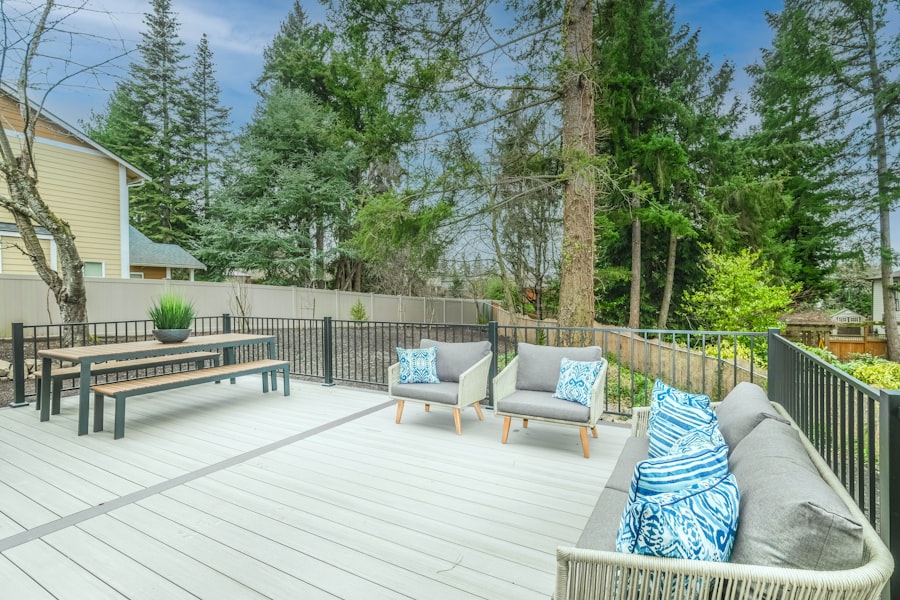
The frame and support structure of your patio deck are crucial for its stability and longevity. Start by building the outer frame of the deck using pressure-treated lumber. Use a level to ensure that the frame is level and square. Secure the frame to the footings or piers using galvanized screws or nails.
Next, install the joists, which will provide support for the decking boards. The spacing of the joists will depend on the size and type of decking boards you plan to use. Consult local building codes and regulations for specific requirements.
Laying the decking boards and creating the deck surface
Laying the decking boards is an important step in creating a smooth and level deck surface. Start by laying the first board along one edge of the deck, ensuring that it is flush with the outer frame. Use galvanized screws or nails to secure the board in place. Continue laying the boards, leaving a small gap between each board to allow for expansion and contraction.
When laying the decking boards, it is important to ensure that they are aligned properly and spaced evenly. Use a chalk line or a straight edge to guide your installation and check for any unevenness or gaps. Make any necessary adjustments before securing the boards in place.
Installing railings and stairs for safety and accessibility
Safety features such as railings and stairs are essential for any patio deck. Railings provide a barrier to prevent falls, while stairs provide easy access to and from the deck. When selecting railings and stairs, it is important to consider both safety and aesthetics.
Choose railings that are sturdy and meet local building codes and regulations. Consider the height of your deck when determining the height of your railings. Additionally, choose a railing design that complements the overall style of your deck.
When installing stairs, ensure that they are wide enough for comfortable use and have a sturdy handrail for support. Consider adding non-slip treads or grip tape to prevent slips and falls.
Applying a protective finish to your patio deck to ensure durability
Applying a protective finish to your patio deck is essential for its durability and longevity. A protective finish will help protect the wood from the elements, preventing rot, decay, and insect damage. It will also enhance the natural beauty of the wood and prevent fading or discoloration.
There are several types of finishes available, including stains, sealers, and paints. Stains are a popular choice for wooden decks, as they enhance the natural color and grain of the wood. Sealers provide a clear protective layer that helps prevent moisture damage. Paints can be used to add color and create a unique look, but they may require more maintenance over time.
Before applying a protective finish, ensure that the deck is clean and dry. Follow the manufacturer’s instructions for application, and apply multiple coats for maximum protection.
Regular maintenance and upkeep to extend the life of your patio deck
Regular maintenance and upkeep are essential for extending the life of your patio deck. Wood is a natural material that requires care and attention to maintain its appearance and durability. Here are some tips for keeping your deck in top condition:
– Clean your deck regularly to remove dirt, debris, and stains. Use a mild detergent and a soft brush or broom to scrub the surface. Rinse thoroughly with water.
– Inspect your deck for any signs of damage or wear. Look for loose boards, nails or screws that need tightening, and any signs of rot or decay. Make any necessary repairs promptly.
– Seal or stain your deck every few years to protect it from the elements. Follow the manufacturer’s instructions for application.
– Remove any standing water or snow from your deck to prevent moisture damage.
– Trim any nearby trees or vegetation that may be touching or overhanging your deck, as this can promote rot and decay.
Adding finishing touches and accessories to enhance the look and functionality of your patio deck
Adding finishing touches and accessories to your patio deck can enhance its look and functionality. Consider adding features such as lighting, furniture, and planters to personalize your deck and create a welcoming outdoor space.
Outdoor lighting can create a warm and inviting atmosphere on your patio deck. Consider installing string lights, lanterns, or spotlights to illuminate the space. Additionally, consider adding solar-powered lights along the stairs or railings for safety.
Choose furniture that is comfortable and durable, and that complements the style of your deck. Consider adding cushions or pillows for added comfort. Additionally, consider adding a table or side tables for dining or entertaining.
Planters and potted plants can add color and life to your patio deck. Choose plants that are suitable for your climate and that require minimal maintenance. Consider adding hanging baskets or vertical gardens to maximize space.
Building a wooden patio deck can be a rewarding and enjoyable project that adds value and functionality to your home. By properly planning and executing your project, you can create a beautiful outdoor space that you can enjoy for years to come. Remember to consider the layout and design of your deck, choose the right type of wood, measure and calculate materials accurately, prepare the ground and foundation properly, build a sturdy frame and support structure, lay the decking boards carefully, install railings and stairs for safety, apply a protective finish, perform regular maintenance and upkeep, and add finishing touches and accessories to enhance the look and functionality of your deck. With confidence and creativity, you can create the perfect wooden patio deck for your home.
If you’re interested in woodworking projects, you might also enjoy reading about creating woodworking plans with free software. This article from Clever Wood Projects provides valuable insights into how to design and plan your projects using accessible and user-friendly software tools. Whether you’re a beginner or an experienced woodworker, this step-by-step guide will help you bring your ideas to life. Check out the article plans-with-free-software-2/”>here for more information.
FAQs
What is a wooden patio deck?
A wooden patio deck is an outdoor living space made of wood that is typically attached to a house or building. It is designed to provide a comfortable and functional area for relaxation, entertainment, and dining.
Why choose a wooden patio deck?
Wooden patio decks are a popular choice for outdoor living spaces because they are durable, versatile, and aesthetically pleasing. They can be customized to fit any style or design preference and can add value to a home.
What are the steps for designing and constructing a wooden patio deck?
The steps for designing and constructing a wooden patio deck include planning and designing the deck, obtaining necessary permits, preparing the site, building the frame, installing the decking, and finishing the deck with railings, stairs, and other features.
What type of wood is best for a patio deck?
The best type of wood for a patio deck depends on several factors, including the climate, the desired look and feel, and the budget. Some popular options include cedar, redwood, pressure-treated pine, and tropical hardwoods like ipe and mahogany.
How do I maintain my wooden patio deck?
To maintain a wooden patio deck, it is important to regularly clean and seal the wood to protect it from moisture, UV rays, and other environmental factors. This may involve pressure washing, sanding, and applying a protective stain or sealant.
How long does a wooden patio deck last?
The lifespan of a wooden patio deck depends on several factors, including the type of wood, the quality of construction, and the level of maintenance. With proper care and maintenance, a well-built wooden patio deck can last anywhere from 10 to 30 years or more.


