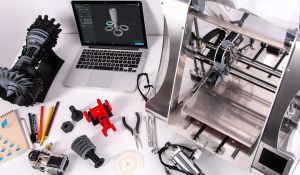
Computer Numerical Control (CNC) programming stands as a pillar in the realm of contemporary manufacturing, offering a path to precision that manual methods can’t match. At the heart of CNC programming lies the transformation of complex three-dimensional designs into a set of instructions that machines can comprehend, commonly known as G-code. This code precisely directs the tool movements, spindle speeds, and feed rates necessary for producing high-quality parts.
For those diving into the field, CNC programming unfolds through three primary approaches: manual, Computer-Aided Manufacturing (CAM), and conversational programming. Each of these methods presents distinct advantages and challenges, catering to various proficiency levels and part complexities. For instance, manual programming might suit simpler tasks, while CAM could be essential for more intricate designs.
We recognize the high demand for skilled CNC programmers in today’s workforce. Interestingly, the essentials of CNC programming can be grasped within a few weeks, with the time frame depending on an individual’s prior experience and learning pace. By mastering CNC programming techniques and leveraging the most advanced software tools, manufacturers can significantly heighten automation, efficiency, and production quality, leading to unmatched flexibility in machining operations.
Furthermore, as manufacturers, we are committed to providing specialized CNC programming services to diverse industries through our contract programming arm, AspectUs, LLC.
In an effort to further the knowledge and skills in this critical field, Okuma has set forth a series of upcoming training sessions:
- Feb 12 – 16, 2024: Electrical Maintenance for Lathes & Machining Centers (OSP-P300A Controls)
- Feb 19 – 23, 2024: Installation & Alignment of MULTUS
- Mar 11 – 15, 2024: Electrical Maintenance for Lathe & Machining Centers (OSP-P200A & P300 Controls)
- Mar 18 – 22, 2024: Mechanical Maintenance of Horizontal Machining Centers
- Apr 1 – 5, 2024: Mechanical Maintenance of Lathes
- Apr 8 – 12, 2024: Electrical Maintenance for Lathe & Machining Centers (OSP-P300A Controls)
- May 6 – 10, 2024: Installation & Alignment of MULTUS
- May 13 – 17, 2024: Introduction to OSP-P500 Controls (customers only)
- May 20 – 24, 2024: Programming and Operation of Machining Centers (HMC & VMC)
By delving into the history of CNC machines documented by American Micro Industries and embracing the possibilities presented by companies like Okuma, manufacturers are positioned to stay at the forefront of technological innovation. The fusion of historical understanding and current expertise ensures a future where CNC programming remains integral to excellence in manufacturing.
CNC Programming Consulting Services
At the heart of successful manufacturing lies a mastery of CNC programming. Our consulting services are designed to guide and support manufacturers in achieving the highest standards of precision and productivity.
Relevant services include:
Upcoming events:
- Okuma Training Schedule
Associated services:
Embark on your journey of mastering precision machining by embracing the wisdom and resources offered through our consulting services. Reach out to enhance your manufacturing capabilities today.
Key Takeaway Table
| Essential Tips for Mastering CNC Programming | Description |
|---|---|
| Understand G-code | Learn the language that controls CNC machines for precise groove geometry and cutting parameters. |
| Optimize Speed, Feed, and Depth of Cut | Adjust these settings based on the hardness of the material to improve machining efficiency. |
| Ensure Proper Workpiece Setup | Accurately secure and align the workpiece to achieve precision. |
| Prevent Machine Collisions | Avoid collisions caused by tool and workpiece dimension errors for precision. |
| Transition Carefully to Batch Production | Pay attention to detail and follow a specific machining sequence for the best results. |
Mastering CNC Programming Consulting for Precision Machining
We, the experts in CNC programming, believe that to become proficient in precision machining, it is paramount that one understands not only the basics but also the nuanced tips and tricks that elevate work quality. Our consulting service prides itself on guiding clients through the intricate world of CNC programming with a keen focus on precision and efficiency.

Understanding G-code
The foundation of mastering CNC lies in comprehending G-code, the language that dictates how a CNC machine moves and operates. It’s like learning the alphabet before you can write—knowing G-code enables you to define the precise movements needed to create complex groove geometries and set accurate cutting parameters.
Optimizing Speed, Feed, and Depth
Efficiency in machining comes from fine-tuning the speed, feed rate, and depth of cut. Each material will respond differently, so adjusting these elements according to the hardness of the material you’re working with is a must for top-notch results. It’s like adjusting your vehicle’s speed based on road conditions—this ensures a smoother journey (or in our case, machining process).
Workpiece Setup: The First Step to Precision
To begin machining, one must ensure the workpiece is set up correctly. This means clamping it down properly and aligning it just right. It’s similar to setting the foundation when building a shed; without a solid base, the end product can be compromised.
Preventing Machine Collisions
One of our key goals is to prevent machine collisions—a common source of errors that can lead to damaged tools, wasted materials, and lost time. By avoiding errors in tool and workpiece dimensions, we keep the machines running smoothly and accurately.
Smooth Transition to Batch Production
When moving from trial cuts to full-scale production, the devil is in the details. Following a clear sequence of machining operations ensures that each part is produced with the same high level of precision. It’s akin to creating woodworking plans; meticulous planning leads to flawless execution.
The journey of CNC machining starts with a reliable and skilled CNC programmer. These individuals are like composers, writing the score that the machine follows. They translate the design into a language—comprising G code and M code—that the CNC machine can interpret. By doing this, they define the toolpath that will result in the finished part.
CNC machines are marvels of modern manufacturing, capable of turning a piece of raw material into a complex part with precision that manual machining can’t match. Whether it’s a CNC mill, lathe, or a combination of machines, they work by following the programmed instructions to the letter, making the role of the CNC program paramount.
Programming a CNC machine isn’t just about knowing the code; it’s also about understanding the machine’s capabilities and limitations. CNC programming software has revolutionized this by providing the tools to simulate and test programs virtually. This is where CAM (Computer-Aided Manufacturing) software comes into play, offering a potent bridge between the digital design (CAD) and the physical manufacturing process.
If you’re interested in CNC programming and looking for quality woodworking plans, you should definitely check out this article on Clever Wood Projects: “You Need Quality Table Woodworking Plans.” It provides detailed and comprehensive plans for creating beautiful tables using CNC technology. Whether you’re a beginner or an experienced woodworker, these plans will help you achieve professional results. Don’t miss out on this opportunity to enhance your CNC programming skills and create stunning woodwork designs. Read more
Conclusion
Manual programming, while less common nowadays, still has its place, especially for simpler tasks or when a hands-on approach is preferred. But for more complex applications, CAM CNC programming uses advanced algorithms to generate efficient toolpaths, reducing the need for trial and error and saving valuable time in the manufacturing process.
Choosing the best CNC programming software is dependent on the needs of the CNC machinists, the complexity of the parts being produced, and the type of CNC machinery being used. Software that allows for both manual and conversational programming can be versatile, accommodating the preferences of different machinists.
CNC machining is not just about subtractive processes like milling or lathes; it’s also expanding into additive manufacturing, like 3D printing. This broadens the horizon for what a CNC operation can achieve, allowing the creation of parts that would be difficult, if not impossible, to machine traditionally.
The role of the CNC operator is also critical in the machining process. They are the ones who ensure that the CNC system is set up correctly, the raw materials are loaded, and the finished parts meet the required specifications. Their hands-on experience allows them to make adjustments on the fly and maintain the smooth operation of the CNC machinery.
A successful CNC machining operation includes several types of tools, from the cutting tool that shapes the raw material to the CNC tool that maintains the part within the machine. These tools must be carefully selected and managed to ensure the precision and efficiency of the machining operation.
Beyond the tools and the machines, the CNC programming style also has a significant impact on the final product. Every programmer has their style, which can influence the machining process. A practical and organized approach to CNC coding will lead to more readable and maintainable programs.
The future of manufacturing is closely tied to advancements in CNC technology. The integration of CAD/CAM software, along with the continued development of CNC programming software, is setting new standards for what can be achieved. The precision, speed, and versatility offered by computer numerical control makes it an essential part of modern manufacturing.
By understanding and utilizing all these aspects of CNC programming and machining, we help manufacturing operations streamline their production processes, reduce errors, and produce parts that meet the highest standards of quality. Whether you’re a seasoned CNC machinist or new to the field, embracing these elements will significantly enhance the productivity and success of your CNC machining services.
By adopting these tips and techniques, precision and efficiency in CNC programming are well within reach. We invite you to explore our consulting services and learn more about CNC programming for precision machining, and enhance the capabilities of your own projects or production line.
FAQs
What is CNC programming?
CNC programming is the process of creating instructions that control the movement of a CNC machine to produce a specific part or product.
What is a CNC machine?
A CNC machine is a computer-controlled machine tool that can perform a variety of operations, such as cutting, drilling, and milling, on a workpiece.
What are the benefits of CNC programming?
CNC programming offers several benefits, including increased accuracy, repeatability, and efficiency in manufacturing processes.
What skills are required for CNC programming?
CNC programming requires knowledge of computer programming languages, as well as an understanding of machining processes and materials.
What programming languages are used for CNC programming?
The most common programming languages used for CNC programming are G-code and M-code.
What is G-code?
G-code is a programming language used to control the movement and operation of a CNC machine.
What is M-code?
M-code is a programming language used to control auxiliary functions of a CNC machine, such as coolant systems and tool changers.
What industries use CNC programming?
CNC programming is used in a variety of industries, including aerospace, automotive, medical, and manufacturing.