For centuries, people have been creating intricate works of art using wood carving. Wood carving enables artists to turn a plain piece of wood into a work of art, from complex sculptures to useful objects. That being said, having the appropriate tools for the job is essential to getting the intended outcomes. Wood carving’s importance in many different cultures across the globe is demonstrated by a brief look at its past. Wood carving has been used to create religious artifacts, decorative items, and even everyday tools by ancient Egyptians, Greeks, Native Americans, and African tribes.
Key Takeaways
- Essential shop tools are important for successful wood carving.
- Both hand tools and power tools have their place in wood carving.
- Chisels, gouges, and knives are essential hand tools for wood carving.
- Rotary tools, jigsaws, and bandsaws are essential power tools for wood carving.
- Keeping your tools sharp is crucial for achieving clean cuts and fine details.
Over time, various styles & techniques have emerged in different regions, contributing to the evolution of the art of wood carving. Having the appropriate tools is crucial for any project involving wood carving. Your work’s final result can be significantly impacted by the tools you use. They dictate how much detail you can accomplish, how simple it is to work with, and how well your carving turns out overall.
Even the most talented carver could find it difficult to realize their vision without the right equipment. Hand tools & power tools are the two primary types of tools used in wood carving. Power tools are motorized and require electricity or batteries to operate, whereas hand tools are conventional instruments that are operated manually. Every kind of tool has benefits & drawbacks of its own, and the decision between the two comes down to personal taste and the particular needs of the task at hand.
Since ancient times, hand tools have been used extensively for wood carving, and this practice continues today. They provide an unrivaled degree of control and precision over power tools. With the aid of hand instruments, carvers are able to feel the wood and make minute adjustments while working, producing carvings that are more organic and lifelike.
| Tool Name | Description | Price |
|---|---|---|
| Chisels | A sharp-edged tool used for carving and shaping wood | 50 |
| Gouges | A curved chisel used for carving hollows and curves | 60 |
| Mallet | A wooden or rubber hammer used to strike chisels and gouges | 20 |
| Sharpening Stone | A tool used to sharpen and hone the edges of chisels and gouges | 30 |
| Wood Carving Knife | A small, sharp knife used for carving intricate details | 40 |
Power tools, on the other hand, are quick and effective. They work well on larger projects or with harder woods because they can remove material quickly. Because power tools make smooth surfaces & fine details easy to create, they also enable more complex and intricate designs. Hand tools are frequently advised for novices since they offer a better understanding of the carving process and aid in the development of critical abilities.
When compared to power tools, hand tools are also less expensive & require less upkeep. To expedite their work and increase their creative options, carvers may decide to purchase power tools as they acquire expertise and take on more difficult projects. It’s crucial to take your projects’ particular requirements into account when choosing which tools to purchase. Hand tools might be your best option if you mostly work on small-scale carvings or wish to enjoy the tactile aspect of carving by hand. However, purchasing a few essential power tools might be a smart move if you work on bigger projects or need the accuracy and speed that power tools provide.
When carving wood, chisels, gouges, and knives are the most important hand tools. Each one is made for a particular use and is available in a range of sizes & forms. Beveled edges are found on flat-bladed tools like chisels.
They are employed to make flat surfaces & remove substantial amounts of wood. Different width chisels enable carvers to make precise cuts or remove material quickly. Gouges are tools with a curved blade that are used to shape concave surfaces, like hollows or bowls. They are available in different sweeps, denoting variations in the blade’s curvature. While a high sweep gouge has a deeper curve and is used for adding details & refining the shape, a low sweep gouge has a shallower curve and is used for roughing out the shape.
Knives are multipurpose instruments that are suitable for a variety of carving jobs. They are used for making accurate cuts, carving details, and shaping delicate areas. Their blade is sharp and pointed. There are various kinds of knives available, such as hook knives, detail knives, and chip carving knives, each made for a particular kind of carving. The quality of the instruments should be taken into account when selecting hand tools. Good quality tools have well-maintained, sharp blades & are constructed from sturdy materials.
Investing in high-quality tools will guarantee that your carving experience is more pleasurable and that they perform better over time. Technique and practice are necessary for using hand tools safely and effectively. Maintaining clean, sharp tools is essential because unclean or dull tools can be hazardous & yield subpar results. Always carve away from your body to prevent accidents, and use a carving glove or thumb guard to protect your hands while doing so.
Work slowly and deliberately, letting the tools do the heavy lifting instead of pushing them. Wood carvers can accomplish specific effects and work more efficiently with the variety of options provided by power tools. Drilling machines, bandsaws, and jigsaws are a few power tools that are necessary for wood carving. Rotary tools, like Dremels, are small, adaptable instruments that work well for many carving jobs. They feature a fast-rotating tip that can be customized with various attachments, including polishing wheels, sanding drums, and carving burrs.
Sanding, adding small details, and shaping are three tasks where rotary tools come in especially handy. With the help of a reciprocating blade, jigsaws are power tools that can cut wood into curved and uneven shapes. They work great for cutting out larger sections of wood or roughening out the shape of a carving.
Jigsaws provide more flexibility and control because they are available in a range of sizes and blade options. Using a continuous loop of toothed metal blade, bandsaws are larger power tools that are used to cut wood. They are frequently used for resawing, which is the process of dividing a thick piece of wood into thinner boards, or for cutting thick pieces of wood.
More intricate projects are suited for bandsaws because they provide more control and precision than jigsaws. The tool’s power and speed, as well as the availability of various attachments and accessories, should all be taken into account when selecting power tools. To attain the intended outcomes and work at your own pace, look for tools with adjustable speed settings and ease of handling.
When using power tools, safety must come first. Use earplugs to lower noise levels and safety goggles or a face shield to shield your eyes from flying debris. When cutting, keep your hands away from the cutting area and secure the wood with a vice or clamps. To ensure safe power tool operation, abide by the manufacturer’s instructions & guidelines.
Maintaining the longevity of your tools and making clean, precise cuts require keeping them sharp. Not only can dull tools be dangerous because they are more likely to slip & cause accidents, but they also make carving more difficult. For sharpening knives & chisels, various techniques and equipment are available.
Using whetstones, or sharpening stones, is one typical technique. These stones are available in a range of grits, from coarse to fine. To achieve a polished, razor-sharp edge, gradually work your way up to a finer grit after beginning with a coarse grit to remove any nicks or dullness from the blade.
Using a sharpening guide or jig is an additional technique. By keeping the angle constant during the sharpening process, these tools help guarantee that the blade is sharpened uniformly. Beginners & people who have trouble maintaining a steady hand will find sharpening jigs especially helpful. It’s critical to periodically assess the sharpness of your tools and make any necessary adjustments. Wood should be easily cut through with a sharp tool and little effort.
Sharpening your tools is necessary if you notice that they are not cutting as well or that you are needing to use more force. Apart from honing your tools, it’s essential to maintain them properly. After every use, wash your tools to get rid of any wood debris or residue. To keep the blades from rusting and to preserve their quality, lightly coat them with oil or wax. Keep your tools out of the elements and in a clean, dry place.
Prioritizing safety is crucial when engaging in the rewarding & enjoyable hobby of wood carving. Wearing safety gear is crucial when carving because it involves sharp tools and can result in flying debris, which can cause accidents & injuries. Safety eyewear or a face shield is among the most crucial pieces of protective equipment.
They shield your eyes from flying dust, wood chips, and other particles. Select face shields or goggles that fit snugly and offer sufficient protection. It’s crucial to protect your ears, particularly when using power tools.
Weighing down with earmuffs or earplugs can help prevent hearing damage from prolonged exposure to loud noises. To protect your lungs from fine wood dust, it’s crucial to wear a respirator or dust mask when using power tools. It is vital to take precautions because breathing in wood dust can lead to respiratory disorders and other health problems. When carving, gloves can give your hands even more protection.
Consider purchasing gloves made especially for carving, as they provide a good mix of dexterity and protection. Wearing gloves with power tools should be done so carefully though, as they can become entangled in the equipment and result in mishaps. A successful wood carving project depends on selecting the right wood.
The qualities & characteristics of various wood kinds can have a big impact on the carving process and the finished product. Hardwood & softwood are the two primary types of wood. Density and durability are attributes of hardwood, which is derived from deciduous trees like oak, walnut, and cherry.
Softwood is typically lighter & simpler to carve and comes from coniferous trees like spruce, pine, and cedar. Take into account the wood’s color, grain, and hardness when selecting it for carving. Smooth finishes and intricate details can be achieved even with harder woods, which are more challenging to carve. Although they may not hold fine details as well, softer woods are easier to carve. The direction that the wood fibers run is referred to as the grain of the wood.
While wood with irregular or interlocking grain can be more difficult to work with, straight-grained wood is easier to carve and yields cleaner cuts. The way your carving turns out can also be influenced by the color of the wood. Rich, warm tones found in certain woods, like cherry or mahogany, can accentuate the beauty of a carving. Some, like birch or maple, have a more neutral, lighter color that draws attention to the carving’s details.
It is crucial to take into account the price & availability of various wood kinds. While certain woods might be more costly or difficult to locate, others might be more widely available in some areas. When selecting wood, take into account your project’s particular requirements as well as your budget. It’s crucial to modify your carving techniques when working with various wood types.
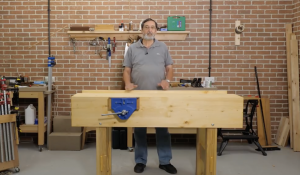
Softwoods might need lighter cuts and more care, while hardwoods might need sharper tools and more force. Try out a variety of wood types to see which ones best fit your preferences and style of carving. A well-structured workshop is imperative for ensuring a seamless and effective carving procedure. Workspace organization lowers the chance of accidents, increases overall productivity, and makes it simple to locate and access your tools. Establish a designated space for your carving endeavors first. This can take the form of a small outdoor area, a designated room, or a garage corner.
Ascertain that the space has sufficient lighting and ventilation to provide a cozy and secure working environment. Invest in storage options to maintain your tools accessible and organized. You can hang your tools and keep them close at hand with wall-mounted tool racks or pegboards, which are a popular option. Smaller tools and accessories are also well-suited for storage in toolboxes or tool chests. Make sure your tool arrangement makes sense for you by taking into account the layout of your workspace.
Store commonly used tools in a sensible order and keep them easily accessible. When looking for a particular tool during a carving session, this will save you time & effort. Think about how your workbench or carving table is organized in addition to how you store your tools.
Make sure it is roomy enough for your projects and sturdy enough. To avoid mishaps and facilitate the easy movement of the wood, keep the surface tidy and free from debris. It takes time, patience, and a solid grasp of carving techniques to become a proficient woodcarver. These are some methods and pointers to help you carve intricate details and make crisp, clean cuts. Using larger tools, like gouges or chisels, start by roughing out the general shape of your carving. Sculpt the general shape of your carving by trimming away any extra material.
Make minor adjustments as necessary as you work cautiously & gradually. Use smaller tools to fine-tune the details after you have the general shape. To add texture, cut fine lines, or make complex patterns, use knives or smaller gouges. Take your time, make deliberate cuts, and use a steady hand.
When carving, it’s crucial to follow the wood’s grain for precise, smooth cuts. A rough finish may result from carving against the grain, which can cause the wood to splinter or tear. Consider the orientation of the wood’s fibers and modify your carving style accordingly. To better see the fine lines and cuts when carving intricate details, use a magnifying glass or bright lighting source. More accuracy & control will be possible as a result. Expand your skill set and experiment with various carving techniques by practicing relief, chip, & round carving, among others.
Try out a variety of techniques to see which ones work best for you; each one calls for a unique strategy and set of equipment. To ensure that your tools last a long time & remain in excellent condition, you must clean and maintain them properly. Maintaining your tools properly not only increases their lifespan but also enhances their functionality and the caliber of your carvings. Make sure your tools are clean to get rid of any wood debris or residue after each carving session. To remove the dust and dirt, use a gentle brush or cloth.
The instruments may get damaged if water or strong chemicals are used. Instead, give the tools a gentle cleaning with a solution of mild soap and water. To keep them from rusting, make sure they are completely dry before storing. In order to preserve the usefulness & extend the life of your carving tools, you should also sharpen them frequently.
In order to achieve clean, precise carvings & extend the life of your tools, proper tool maintenance is crucial.
If you’re interested in wood shop carving tools, you might also want to check out this article on Clever Wood Projects about making a woodworking cherry table. It provides step-by-step instructions and tips for creating a beautiful and functional piece of furniture using cherry wood. Whether you’re a beginner or an experienced woodworker, this article offers valuable insights and techniques to enhance your woodworking skills. Read more
FAQs
What are wood shop carving tools?
Wood shop carving tools are specialized tools used for carving and shaping wood. These tools are designed to remove wood material from a block or piece of wood to create a desired shape or design.
What are the different types of wood shop carving tools?
There are several types of wood shop carving tools, including chisels, gouges, knives, saws, and rasps. Each tool is designed for a specific purpose and can be used to create different types of cuts and shapes.
What materials are wood shop carving tools made from?
Wood shop carving tools are typically made from high-quality steel or carbon steel. Some tools may also have wooden or plastic handles for added comfort and grip.
What are the benefits of using wood shop carving tools?
Using wood shop carving tools allows for precise and detailed carving, making it easier to create intricate designs and shapes. These tools also allow for greater control and accuracy, resulting in a more polished and professional-looking finished product.
What safety precautions should be taken when using wood shop carving tools?
When using wood shop carving tools, it is important to wear protective gear such as safety glasses and gloves. It is also important to keep the work area clean and free of clutter to prevent accidents. Always use the tools as intended and avoid using them in a way that could cause injury.