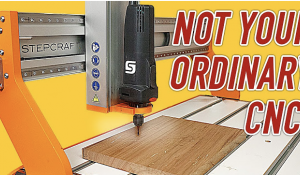
Ancient civilizations have been engaged in the craft of woodworking for centuries. Woodworking has been an important part of human history, from building buildings to crafting elaborate furniture. A crucial element in attaining success in woodworking is utilizing appropriate tools for the task. This post will discuss the various kinds of woodworking tools and their significance for producing elegant and useful objects. When it comes to woodworking, accuracy is essential because even the smallest deviation can have an impact on the overall quality of the final product. Accurate cutting and a seamless fit between all parts depend on the use of measuring and marking tools.
Key Takeaways
- Woodworking tools are essential for any woodworking project.
- Measuring and marking tools are crucial for precise cuts.
- Power tools can make woodworking more efficient.
- Hand tools are important for traditional woodworking techniques.
- Cutting tools are necessary for different types of wood.
Combination squares, marking gauges, squares, and tape measures are a few common measuring & marking instruments. Woodworkers can measure lengths precisely with the help of a tape measure, which is a multipurpose tool. To ensure accuracy when taking measurements, it’s crucial to select a tape measure with unmistakable markings and a sturdy locking mechanism. To guarantee that cuts are made at an exact 90-degree angle, squares are utilized. They are available in different sizes, and because of their versatility, the combination square is a popular option.
You can use a combination square as a level, a depth gauge, and a square. Using marking gauges, one can precisely draw lines on a wood surface to mark the locations of cuts or joints. Usually, they are made up of a marking pin or blade that can be adjusted to the desired measurement and a beam. Prior to making any cuts, make sure you take your time and double-check all measurements when using measuring and marking tools.
To prevent any damage or errors, always mark the wood lightly. The woodworking industry has undergone a revolution thanks to power tools, which boost productivity and speed. They come in particularly handy when cutting repeatedly or working with large pieces of wood.
| Tool | Description | Usage |
|---|---|---|
| Table Saw | A saw with a circular blade that is mounted on an arbor and driven by an electric motor. It is used for making straight cuts on wood. | Cutting large pieces of wood into smaller pieces, ripping boards, and making angled cuts. |
| Jointer | A machine used to create a flat surface along the length of a board. | Preparing rough lumber for use in a project, creating a flat surface for gluing boards together. |
| Planer | A machine used to create a uniform thickness on a board. | Preparing rough lumber for use in a project, creating a uniform thickness for gluing boards together. |
| Router | A power tool used to hollow out an area in a piece of wood. | Creating decorative edges, cutting grooves, and making joints. |
| Chisels | A hand tool with a sharp cutting edge used for carving or cutting wood. | Carving intricate designs, cutting mortises and tenons, and shaping wood. |
| Clamps | A device used to hold two pieces of wood together while glue dries. | Gluing boards together, holding pieces in place while cutting or drilling. |
Power drills, routers, jigsaws, & circular saws are a few of the frequently used power tools in woodworking. With the ability to make bevel cuts, rip cuts, and straight cuts, circular saws are an incredibly useful tool. Large pieces of wood or plywood cut with them are perfect. To guarantee straight cuts when using a circular saw, it’s crucial to take safety precautions like donning safety glasses and using a saw guide.
Jigsaws are used to cut wood in curved or intricate shapes. With their swift up-and-down motion, their narrow blade makes for accurate, well-managed cuts. To make precise cuts with a jigsaw, it’s critical to firmly hold the wood in place and adhere to the marked lines. Routers are used to cut grooves in wood, shape edges, & create decorative profiles. For added stability, they can be fixed on a router table or used as a handheld device.
To avoid tear-out when using a router, make sure you use the right router bit and work with the grain of the wood. Power drills are necessary tools for driving screws & boring holes in wood. They can be corded or cordless and come in a range of sizes. Using the proper drill bit for the intended hole size and maintaining constant pressure are crucial when using a power drill to keep the tool from slipping. The most important thing to remember when using power tools is safety.
Follow the manufacturer’s instructions for each tool & always wear the proper safety gear, such as safety glasses and earplugs. To further avoid mishaps, keep power cords out of the cutting area & properly fasten the workpiece. Even with their benefits, power tools cannot replace hand tools in the woodworking industry, particularly when using traditional methods.
For fine detail work, hand tools are frequently utilized because they offer greater control and accuracy. Hand saws, chisels, and hand planes are a few frequently used hand tools in the woodworking industry. Different types of hand saws are available, including dovetail, rip, and crosscut saws.
They can be used for joinery cuts, straight cuts, & angled cuts. Because they rely on the physical strength & technique of the woodworker, hand saws require skill and practice to use effectively. Carving and shaping wood is done with chisels. They are available in a variety of sizes & forms, including mortise, carving, & bench chisels.
Sharpening and upkeep are necessary for chisels to function at their best. Smoothing & flattening wood surfaces is done with hand planes. To remove thin shavings of wood, they are made up of an adjustable blade or iron. To get the best results, hand planes need to be set up & sharpened properly. It’s critical to use controlled pressure and a firm grip when using hand tools.
Rather than rushing it, take your time and allow the tool to do the work. For optimum performance, also remember to maintain the cutting edges sharp & well-maintained. Hardness, density, and grain pattern are just a few of the attributes that vary amongst wood species. In order to achieve precise and clean cuts, it is crucial to select the appropriate cutting tool for the particular type of wood you are working with. Handsaws, circular saws, jigsaws, and band saws are a few frequently used cutting tools in woodworking.
Handsaws are adaptable cutting instruments that work well for a variety of cuts. While rip saws are used to cut with the grain, crosscut saws are used to cut across it. For accurate joinery cuts, dovetail saws are utilized.
For cutting intricate or curved wood, jigsaws are the best tool. With their swift up-and-down motion, their narrow blade makes for accurate, well-managed cuts. When working with softer woods or cutting out shapes or patterns, jigsaws come in particularly handy. Strong cutting instruments, circular saws can be used to make rip, bevel, and straight cuts.
Large pieces of wood or plywood cut with them are perfect. Handheld or table-mounted circular saws are available for increased stability. Band saws are used to cut irregular shapes in wood, resaw, and make curved cuts. They are made up of an endless looping band of teeth. Band saws are adaptable instruments that work well for a range of woodworking applications.
Take the type of wood you are working with, the desired cut, and the required level of precision into consideration when selecting the appropriate cutting tool for the job. When using cutting tools, always adhere to the manufacturer’s instructions & take the necessary safety precautions. The strength and longevity of the completed piece are determined by the joinery, which makes it a crucial component of woodworking. To join wood components together seamlessly & robustly, joinery tools are utilized.
biscuit joiners, routers, chisels, and dovetail saws are a few common joinery tools. Dovetail joints are renowned for their strength and visual appeal, and they are created using dovetail saws. Dovetail joints are frequently utilized in the building of drawers & boxes. Thin blades with fine teeth are characteristic of dovetail saws, enabling accurate cutting. Dovetail joints, mortise and tenon joints, and hinge installation are just a few of the joinery tasks that chisels can be used for. They are very versatile tools.
Clean & precise cuts with chisels require sharpening and the right technique. Dado joints, rabbet joints, and dovetail joints are among the many joint types that can be made with a router. If you want more stability, you can mount them on a router table or use them handheld.
For routers to produce the desired joint, certain router bits must be used and the setup must be correct. Specialized instruments called biscuit joiners are employed in the production of biscuit joints. When joining two pieces of wood together, as in tabletops or cabinet construction, biscuit joints are frequently used. To make a solid connection, biscuits are inserted into slots made in the wood by biscuit joiners.
It’s crucial to take your time and make sure that every part fits together securely when making joints. Utilize the proper joinery tool for the particular joint you are making, and make sure you are following each tool’s manufacturer’s instructions. When it comes to obtaining a polished & smooth surface, sanding & finishing are the last steps in the woodworking process. While finishing improves the wood’s appearance and shields it from moisture and wear, sanding eliminates any imperfections or roughness.
Orbital sanders, sandpaper, and stains are a few common finishing and sanding tools. Orbital sanders are small, portable power tools that sand wood surfaces in a circular motion. They work great on big surfaces and can be used with different sandpaper grits to get the right level of smoothness. For best results, orbital sanders need to be used properly, with the right sandpaper.
From coarse to fine, sandpaper is available in different grits. While fine grits are used to achieve a smooth finish, coarse grits are used to remove material quickly. For optimal results, it’s crucial to progressively move up to a finer grit when sanding, starting with a coarser one. The purpose of stains is to preserve wood from wear and moisture while enhancing its inherent beauty.
They are available in a variety of hues and sheens, including gloss, satin, and matte. Applying stains requires adhering to the manufacturer’s recommendations and applying thin, even coats for a polished look. Sand the wood first using a coarse grit sandpaper and then work your way up to a finer grit until you have a smooth & polished surface. To avoid scratches, clear away any dust or debris in between sanding steps.
Follow the manufacturer’s instructions for applying the selected finish once the required level of smoothness has been reached. When it comes to woodworking, safety should always come first because improper use of the tools & equipment can be extremely dangerous. To reduce the risk of mishaps and injuries, it’s critical to wear the proper safety gear & adhere to regulations. Gloves, dust masks, safety glasses, and ear protection are a few common pieces of safety gear used in woodworking.
Safety glasses are necessary to shield the eyes from flying particles like dust or wood chips. Wearing them is mandatory when operating power tools or doing any other woodworking task that could endanger one’s eyesight. When operating loud power tools like routers or table saws, it’s crucial to wear protective gear for your ears.
Earmuffs or earplugs are two types of ear protection that can be worn to lessen the risk of hearing damage caused by prolonged exposure to loud noise. Dust masks are used to shield the lungs from dangerous particles, such as wood dust. Wearing a dust mask is crucial when sanding, cutting, or doing any other task that creates dust because wood dust can lead to allergies and respiratory problems. Gloves are used to shield the hands from fractures, cuts, & other harm.
When using sharp objects or rough wood surfaces, they should be worn. But, since this can affect the control & accuracy needed for woodworking, it’s crucial to select gloves that don’t sacrifice dexterity and grip. Keeping one’s workspace tidy and orderly is just as crucial as donning safety gear. When not in use, store tools and equipment carefully, & clear the area of any clutter or debris that could fall & cause someone to trip. For each tool, make sure you follow the manufacturer’s instructions and, if necessary, seek professional assistance.
For woodworking tools to last a long time, proper upkeep and sharpening are necessary. Frequent maintenance keeps rust, corrosion, & other problems at bay that could compromise the tools’ ability to operate. Rust inhibitors, honing guides, and sharpening stones are a few common maintenance & sharpening instruments.
Saw blades, hand planes, and chisels can all have their cutting edges sharpened with the help of sharpening stones. They are available in a range of grits, from coarse to fine, & using the right technique will yield the best results. In order to lubricate the surface & avoid overheating, sharpening stones should be used with water or oil. While sharpening tools, honing guides are used to keep the angle accurate.
They support accurate & consistent sharpening, especially for novices. With sharpening stones or other sharpening tools, honing guides can be angled to the desired result. Metal tools are shielded from rust and corrosion by rust inhibitors. They form an impenetrable shield to shield the tools’ surface from damage from moisture and other elements.
It is advisable to frequently apply rust inhibitors, particularly in humid environments or when tools are not used for extended periods of time. To maintain and sharpen tools effectively, it is important to establish a regular maintenance routine. When necessary, apply rust inhibitors to tools and keep them dry & clean after each use.
When a tool begins to feel dull or the cutting edges begin to show wear, it is time to sharpen them. Consult a professional if necessary, and adhere to the manufacturer’s instructions for each tool. Apart from the fundamental instruments mentioned earlier, there exist diverse add-ons that can augment your woodworking artistry. When woodworking, these accessories can increase productivity, accuracy, and safety.
Workbenches, safety push sticks, clamps, and dust collection systems are a few typical woodworking accessories. When making exact cuts or while the glue dries, clamps are used to hold wood parts together. Bar clamps, pipe clamps, and spring clamps are just a few of the shapes and sizes available. The wood components are kept stable & in the intended position by clamps. To provide a stable & well-organized workspace, workbenches are necessary.
To cut, sand, and assemble wood components, they offer a level surface. For firmly securing the workpiece, workbenches frequently include integrated vises or clamping systems. In order to improve air quality and lower the risk of respiratory problems, dust collection systems are used to remove dust and debris from the air. To put them together, they have a central dust collection system or a vacuum or dust collector that is driven by power tools. Sanding, cutting, & other dust-producing tasks should all be done with dust collection systems in place.
Hands are kept safely away from the cutting area when using safety push sticks to guide wood through power tools like table saws or jointers. In addition to maintaining order, they guard against mishaps and harm. When using power tools with exposed blades, safety push sticks must be used.
Think about your individual requirements and the jobs you do on a regular basis when selecting woodworking accessories. Make an investment in dependable, long-lasting, high-quality accessories. For correct accessory use and upkeep, adhere to the manufacturer’s instructions. It is imperative to take into account the accessories’ compatibility with your woodworking tools and equipment.
Seek for add-ons that will improve your woodworking projects’ efficiency & safety. Take into account the manufacturer’s customer service and the accessibility of replacement parts. You can make sure that your woodworking experience is more successful and pleasurable by carefully choosing the woodworking accessories that suit your needs.
If you’re interested in wood shop tools, you might also want to check out this article on Clever Wood Projects: “Top 5 Woodworking Projects That Sell – Must Watch.” It provides valuable insights into the most popular wood projects that have a high potential for selling. Whether you’re a beginner or an experienced woodworker, this article offers inspiration and guidance for creating profitable woodworking projects. Read more
FAQs
What are wood shop tools?
Wood shop tools are tools used in woodworking to shape, cut, and join wood pieces. These tools include saws, drills, sanders, planers, chisels, and routers.
What are the different types of saws used in woodworking?
The different types of saws used in woodworking include circular saws, jigsaws, band saws, miter saws, and table saws. Each saw has a specific purpose and is used for different types of cuts.
What is a drill press?
A drill press is a woodworking tool used to drill precise holes in wood. It consists of a motor, a drill bit, and a table that can be adjusted to different angles and heights.
What is a planer used for?
A planer is a woodworking tool used to smooth and level the surface of a piece of wood. It can also be used to reduce the thickness of a piece of wood.
What is a router used for?
A router is a woodworking tool used to shape and cut wood. It can be used to create decorative edges, cut grooves, and make joints.
What safety precautions should be taken when using wood shop tools?
Safety precautions when using wood shop tools include wearing eye and ear protection, using push sticks and guards, keeping the work area clean and free of clutter, and following the manufacturer’s instructions for each tool. It is also important to use tools that are in good condition and to never use a tool for a purpose it was not intended for.