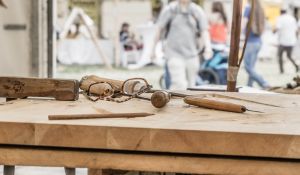
For centuries, people have been engaging in the fascinating craft of woodturning. It entails using a lathe to shape and carve wood into elaborate and exquisite designs. The ability of woodturning to turn a plain piece of wood into a work of art has made it more and more popular over time. The background of woodturning, its fundamentals, & the range of methods and equipment employed will all be covered in this article.
Key Takeaways
- Woodturning is a form of fine woodworking that involves shaping wood on a lathe to create functional or decorative objects.
- Woodturning has a rich history that dates back to ancient times and has evolved over the centuries to include modern techniques and tools.
- To get started in woodturning, you’ll need a lathe, chisels, and other safety equipment, as well as knowledge of basic techniques like spindle turning and bowl turning.
- Choosing the right wood for your project is crucial, as different types of wood have different properties that affect their workability and appearance.
- Designing and planning your project is also important, and can involve sketching out your ideas, creating templates, and experimenting with different shapes and forms.
We’ll also talk about how crucial wood selection, preparation, and finishing are to successful woodturning projects. We will also explore and present the newest developments in the field of contemporary woodturning art. Lastly, we’ll talk about the future of this craft and examine the various venues for exhibiting woodturning artwork. Ancient times are the start of the rich history of woodturning. Early civilizations in Egypt and Mesopotamia shaped wood with crude lathes, which is where woodturning got its start. A basic bow or cord was used to turn the wood on these early hand-operated lathes.
Woodturning became popular throughout the world over time, reaching Greece, Rome, and China. The development of the pole lathe in medieval Europe was one of the pivotal events in the history of woodturning. Larger and more intricate pieces of wood could be turned by woodturners thanks to this invention.
Using a treadle and a cord, the wood was turned on a foot-operated pole lathe. This technological breakthrough transformed the industry & opened the door for more advancements. The industrial revolution significantly altered woodturning in the 18th and 19th centuries. Traditional woodturning has declined since the invention of steam-powered lathes and the mass manufacturing of turned wooden objects.
| Category | Metric |
|---|---|
| Number of Woodturning Artists | 50 |
| Number of Woodturning Pieces | 200 |
| Number of Wood Species Used | 15 |
| Number of Woodturning Techniques | 10 |
| Number of Woodturning Workshops | 5 |
| Number of Woodturning Exhibitions | 3 |
However, a resurgence of interest in artisanal & handmade goods in the late 20th century led to a revival of the craft. Both professional and amateur woodworkers engage in woodturning nowadays, and the craft is always changing due to the development of new methods and instruments. Having the proper equipment and understanding of fundamental methods is crucial to getting started with woodturning. When shaping wood, the lathe is the main tool used in woodturning; it holds the wood & rotates it. In order to cut and shape the wood, additional necessary tools are gouges, chisels, & scrapers.
Purchasing high-quality tools and keeping them sharp and well-maintained are crucial. Depending on the kind of wood being used and the desired result, different woodturning techniques are employed. Faceplate turning, bowl turning, and spindle turning are a few popular techniques. Bowl turning is the process of making hollowed-out bowls & vessels, whereas spindle turning is the shaping of long, cylindrical pieces of wood. Smooth or curved surfaces on the wood’s face can be produced by faceplate turning.
A woodturner’s safety is their first priority. To protect oneself from flying wood chips & debris, it is imperative to wear protective gear, such as safety glasses and a face shield. To reduce the chance of accidents, it’s also critical to adequately secure the wood on the lathe and to utilize the right cutting methods.
Before taking up woodturning, novices should take the time to study and practice appropriate safety precautions. The result of a woodturning project is greatly influenced by the wood selection. Grain patterns, hardness, and color are just a few of the unique qualities that differentiate various wood species. Cherry, walnut, oak, & maple are a few of the woods that are frequently used in woodturning.
A popular option due to their distinctive colors and textures are exotic woods like rosewood & ebony. Wood that is suitable for turning should be taken into account when choosing it for a project. While certain woods may be too soft or too hard for a given technique, others may be more prone to splitting or warping.
Together with any flaws or imperfections that could affect the outcome, it’s crucial to take the wood’s size and shape into account. Selecting stable, dry wood is advised because wet or green wood can warp or split when being turned. A key part of the woodturning process is planning & designing. By giving your project enough thought, you can make sure you reach your goals and stay clear of any potential pitfalls. Having a clear idea of what you want to create is crucial before beginning any project.
Aside from any ornamental details or embellishments you may wish to add, think about the final piece’s shape, size, & proportions. One helpful tip is to create a rough sketch or a 3D model of your design before starting. This way, before you turn the wood, you can see how it will turn out & make any necessary changes.
The wood grain’s influence on the overall design must also be taken into account. A piece of wood with a strong grain pattern, for instance, might look best turned into a bowl or vase, whereas a piece with a more uniform grain might work better for spindle turning. Consideration of the project’s practical elements, such as the instruments and methods that will be employed, is another aspect of good planning.
Knowing every step of the turning process inside and out and being ready for any obstacles that might come up are crucial. By making a plan in advance, you can make sure you have all the equipment & supplies you’ll need on hand and are ready to overcome any challenges that may arise. After you have gotten the hang of woodturning, you might want to look into more sophisticated methods to advance your skill.
Hollowing is one such method that entails making hollowed-out forms like bowls, vases, & boxes. Hollowing calls for specific equipment, like scrapers and hollowing gouges, as well as a steady hand and a solid grasp of wood grain. One more sophisticated method is segmented turning, which is piecing together several pieces of wood to create complex patterns & designs. There are countless options available in terms of shape, color, and texture with this technique.
To get smooth joints and a well-balanced design, meticulous planning and execution are necessary. Other sophisticated methods in woodturning include thread chasing, which involves cutting threads into the wood to create decorative elements, and ornamental turning, which involves utilizing specialized tools & jigs to create intricate patterns and designs. Although these methods demand a high degree of skill and knowledge, the results can be incredibly beautiful and one-of-a-kind works of art. Finishing protects the wood from deterioration & adds to its beauty, making it an essential step in the woodturning process.
Depending on the desired result & the type of wood being used, a variety of finishing techniques can be applied. Staining is a popular technique that involves applying a colored stain to the wood to enhance its natural beauty or to achieve a specific color. It’s critical to select a stain that works well with the kind of wood being used & to apply it smoothly and evenly. Sanding is yet another crucial stage in the completion process. Sandpaper or sanding pads are used to smooth the wood’s surface and get rid of any flaws or tool marks.
In order to attain a polished & smooth surface, sanding should be done gradually, working one’s way down to finer grits. The wood’s grain should be followed when sanding, and any small or minute details should be taken into consideration. The last stage of finishing is polishing, which entails giving the wood a protective layer to improve its durability and sheen. Oils, waxes, and lacquers are just a few of the finishes that can be applied. Selecting the appropriate type of finish for your project is crucial because each one has distinct qualities & application techniques.
It’s crucial to apply the finish uniformly & to give it enough time to cure & dry before handling or utilizing the completed item. Contemporary woodturners are pushing the boundaries of their craft and experimenting with new designs and techniques, which has led to a recent surge in popularity of woodturning art. In order to create distinctive & avant-garde pieces, wood is often mixed with other materials like metal, glass, or resin in a technique known as mixed media woodturning. There are countless possibilities for texture, color, and form thanks to this blending of materials. The investigation of asymmetry & irregular shapes is another trend in modern woodturning art.
While symmetrical and balanced forms were frequently the goal of traditional woodturning, many modern woodturners are embracing asymmetry and the inherent beauty of irregular shapes. A more natural and free-flowing approach to woodturning is made possible by this trend, producing genuinely unique pieces. Contemporary woodturning art exhibits a diverse range of styles and aesthetics in its design. While some woodturners prefer to create simple, understated designs, others enjoy adding elaborate details.
Exploring and utilizing the wood’s inherent features, such as knots, burls, and spalting, into designs is another trend that is gaining popularity. Your woodturning projects may need to be displayed and shared with others once you’ve finished them. There are many ways to display woodturning artwork, such as online galleries, contests, and exhibitions.
You can meet other woodturners and promote your work by taking part in exhibitions and competitions. Receiving input & acknowledgment from professionals in the field is another benefit. The popularity of using online platforms to display and sell woodturning artwork has grown.
Woodturners can connect with potential customers worldwide and reach a broader audience by using websites and social media platforms. Through blog entries, videos, and tutorials, online platforms also give woodturners a place to impart their skills and knowledge to others. The art of woodturning has a bright future ahead of it, full of chances for advancement & creativity. Still, there are issues that must be resolved to guarantee the survival and significance of woodturning as an art form.
Quality wood is hard to come by, which poses a challenge for woodturning artists. With the growing popularity of woodturning, it’s critical to make sure that wood is sourced ethically and sustainably. This is encouraging sustainable forestry methods and lending support to programs that work to safeguard & maintain our forests. Attracting & motivating the upcoming generation of woodturners presents another difficulty.
It is crucial to impart this knowledge to the next generation because woodturning is a skill that takes time, patience, and dedication to master. We can make sure that the craft of woodturning survives by providing seminars, training sessions, and mentorship opportunities. Notwithstanding these difficulties, the art of woodturning offers a lot of room for development and creativity.
Technological innovations, like computer-aided design and manufacturing, have the power to transform the craft and create new avenues for production & design. Also, there is a chance for woodturning art to become even more well-known and appreciated given the growing demand for handmade and artisanal goods. To sum up, woodturning is an enthralling and fulfilling type of fine woodworking. It provides a singular method for turning a plain piece of wood into a work of art & permits limitless creativity and self-expression. There’s always something new to discover and learn about woodturning, regardless of experience level. Thank you for reading this article, and happy woodturning!
Why not give it a try and see where your creativity takes you?
If you’re interested in exploring the world of woodturning art forms in fine woodworking, you may also find this article on Clever Wood Projects intriguing. It delves into the importance of having woodworking plans when starting out in this craft. The article highlights how having a well-thought-out plan can help beginners avoid costly mistakes and ensure a smoother woodworking experience. Check it out here to learn more about the significance of woodworking plans in honing your skills and creating beautiful woodturning art pieces.
FAQs
What is woodturning?
Woodturning is a form of woodworking that involves using a lathe to shape wood into various forms and designs.
What are some common woodturning art forms?
Some common woodturning art forms include bowls, vases, pens, and decorative objects such as ornaments and sculptures.
What types of wood are commonly used in woodturning?
Common types of wood used in woodturning include maple, cherry, walnut, oak, and mahogany. Exotic woods such as ebony and rosewood are also used for their unique colors and patterns.
What tools are needed for woodturning?
Tools commonly used in woodturning include gouges, chisels, scrapers, and parting tools. A lathe and various accessories such as chucks and faceplates are also necessary.
What is the process of woodturning?
The process of woodturning involves mounting a piece of wood on a lathe and using various tools to shape and carve the wood into the desired form. The wood is typically turned at high speeds while the tools are used to remove material and create the desired shape.
Is woodturning a difficult skill to learn?
Woodturning can be a challenging skill to learn, as it requires a combination of technical knowledge and artistic ability. However, with practice and patience, anyone can learn to create beautiful woodturned objects.