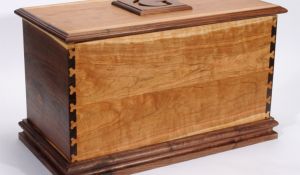
Centuries of people have been practicing the age-old craft of woodworking. Jointering two or more pieces of wood together is called joinery, and it’s one of the most significant aspects of woodworking. Of the different joinery techniques, one of the strongest and most adaptable is the mortise and tenon joint. A traditional woodworking joint called a mortise & tenon is formed by one piece of wood having a protruding tenon that fits into a matching mortise on another piece of wood.
Key Takeaways
- Mortise & Tenon Joints are a traditional woodworking technique used to join two pieces of wood together.
- The joint consists of a mortise hole in one piece of wood and a tenon tongue on the other piece that fits snugly into the hole.
- Mortise & Tenon Joints are incredibly strong and durable, making them ideal for furniture and structural applications.
- They are also versatile and can be used in a variety of woodworking projects, from simple frames to complex structures.
- Mortise & Tenon Joints have been used for centuries and continue to be a popular choice for woodworkers due to their timeless beauty and strength.
Because of its strength and longevity, this joint is a well-liked option for a variety of woodworking projects. It’s critical to comprehend the fundamental elements of a mortise and tenon joint in order to comprehend its anatomy. In contrast to the mortise, which is a hole or cavity made in the other piece of wood to accommodate the tenon, the tenon is a projection or tongue that is formed on the end of one piece of wood. A solid and reliable bond is formed when the tenon is inserted into the mortise.
There are various varieties of mortise & tenon joints, and each has special qualities and uses. The most popular kinds are the blind mortise and tenon, in which the tenon is invisible from the exterior of the joint, and the through mortise and tenon, in which the tenon travels entirely through the mortise. The tusk tenon, the haunched mortise & tenon, and the wedged mortise and tenon are some additional variations. A few necessary tools are needed to create a mortise and tenon joint. These consist of a tenon saw for cutting the tenon, a chisel for cutting the mortise, and a mallet for pounding the tenon into the mortise. To make sure the joint is accurate and precise, other instruments like a shoulder plane, mortise gauge, and marking gauge may be utilized.
The strength and load-bearing ability of mortise and tenon joints are well known. The two pieces of wood are bonded together by glue or other adhesives thanks to the joint’s interlocking design, which provides a lot of surface area. This produces a joint that can withstand a considerable amount of weight and force.
| Joint Type | Strength | Applications |
|---|---|---|
| Mortise & Tenon | Unmatched | Furniture, Timber Framing, Boat Building |
| Dowel Joint | Less Strong | Cabinetry, Picture Frames |
| Biscuit Joint | Less Strong | Cabinetry, Furniture |
| Butt Joint | Weakest | Simple Woodworking Projects |
Morisse and tenon joints are superior to other joinery methods like dowel or butt joints in a number of ways. First of all, they offer a bigger gluing surface, increasing the joint’s overall strength. Also, the joint’s stability and resistance to movement are enhanced by the tenon and mortise’s mechanical interlock. Finally, to further increase the joint’s load-bearing capacity, wooden pegs or wedges can be used to reinforce it. In many different types of woodworking projects, Mortise and Tenon Joints are used. This joint has repeatedly shown its adaptability through the construction of boats, musical instruments, furniture, and timber framing.
The ability of mortise and tenon joints to work with a variety of wood species is one of their main benefits. The joint can be tailored to the unique properties of the wood, whether it is made of softwoods like pine or hardwoods like oak. No matter what kind of wood they are working with, woodworkers can create strong and long-lasting joints thanks to this versatility. To further suit particular requirements, mortise and tenon joints can be tailored. For instance, to meet various design specifications, the tenon & mortise’s size and shape can be changed.
Woodworkers are able to produce joints that are both visually beautiful & robust because of this flexibility. The history of mortise & tenon joints dates back to prehistoric times. The Egyptian, Greek, & Roman societies utilized the joint, which has since undergone evolution and improvement. For the construction of wooden structures and furniture, mortise and tenon joints were widely utilized in ancient Egypt. Also, the joint was employed in the building of ancient Greek and Roman temples, where it was essential for bearing the weight of the enormous stone blocks that were used in their construction.
Tenon and mortise joints have been culturally significant as well as functional throughout history. The joint is a symbol of durability, strength, and skill in many cultures. It is still widely used today and is frequently connected to conventional woodworking methods. For mortise and tenon joints, achieving an exact fit is essential.
An ill-fitting joint has the potential to weaken the structure’s overall stability & strength over time. Numerous elements may influence how well a mortise and tenon joint fits. These consist of the precision of the assembly procedure, the caliber of the wood utilized, and the accuracy of the tenon and mortise cutting & shaping. For a snug & secure fit, woodworkers need to be very aware of these factors.
A perfect fit can be obtained by utilizing a variety of techniques. To precisely measure and mark the wood, these tools include marking gauges and mortise gauges. Sharp chisels and saws are used to cut the joint, and mallets or clamps are used to assemble the joint. A robust and long-lasting joint can be achieved by taking the time to fit it correctly. The longevity of mortise & tenon joints is one of its main benefits.
These joints have a multigenerational lifespan when built and maintained correctly. Because of their natural strength and stability, mortise and tenon joints last a long time. A connection that is resistant to wear & tear is produced by the joint’s interlocking design, additional reinforcement, & the use of adhesives.
Regular maintenance is necessary to guarantee the longevity of mortise & tenon joints. Making any required repairs or adjustments as well as examining the joint for any indications of movement or damage are included in this. Further preventing moisture damage and extending the joint’s life is the application of a protective finish to the wood.
Mortise and tenon joints are not only strong and durable, but they also look good. A distinctive & aesthetically pleasing element is added to any woodworking project by the visible interlocking of the tenon and mortise. By choosing wood species and grain patterns with care, woodworkers can improve the visual appeal of mortise and tenon joints. A seamless, harmonious appearance can be achieved by matching wood colors, while striking visual effects can be produced by contrasted wood colors. Further improving the joint’s overall appearance is the application of ornamental pegs or wedges. To create even more visually appealing designs, mortise & tenon joints can be combined with other joinery techniques.
For instance, woodworking projects can be made more intricate and visually appealing by combining finger joints or dovetail joints with mortise and tenon joints. A variety of woodworking projects employ mortise & tenon joints. A few of the most popular uses are as follows:1. Making Furniture: Bed frames, tables, chairs, cabinets, & other pieces of furniture are frequently constructed with mortise and tenon joints.
The joint is perfect for handling the weight & strain of regular use because of its strength and stability. 2. Traditional timber framing involves joining large wooden beams to form structures like bridges, houses, and barns. Mortise and tenon joints are a mainstay of this method. The joint is a crucial part of timber frame construction because of its ability to support weight and resistance to movement. 3.
Mortise & tenon joints are employed in the building of wooden boats to give the hull and other structural elements strength and stability. Boat builders can rely on the joint because of its resilience to weather and water pressure. 4. Music Instrument Construction: When building instruments like pianos, violins, and guitars, mortise and tenon joints are frequently utilized. The quality of sound produced by a joint depends on its capacity to transfer vibrations and sustain the tension of strings. 5. Additional Uses: Mortise and tenon joints are employed in a number of different woodworking projects, including frames, sculptures, doors, & windows.
The joint is appropriate for a variety of applications due to its strength & versatility. Let me sum up by saying that mortise & tenon joints are a strong and ageless joinery method in woodworking. For a variety of projects, from furniture building to boat building, their strength, adaptability, and durability make them a popular choice. Mortise and tenon joints have a long history; they were utilized by prehistoric societies and changed over time.
Its importance in woodworking is further highlighted by its cultural significance and association with craftsmanship. For mortise and tenon joints to be strong and stable, they must fit correctly. Woodworkers can create joints that will last for generations and achieve a perfect fit by paying close attention to the cutting, shaping, and assembly process. Not only do mortise & tenon joints function well, but they also look good.
Any woodworking project gains a distinctive & eye-catching element from the tenon and mortise’s obvious interlocking. Mortise and tenon joints are used in a variety of woodworking projects, including the construction of boats and furniture. They are a flexible option for woodworkers due to their compatibility with various wood species and ability to be customized for particular requirements. In summary, mortise and tenon joints are evidence of the enduring strength of conventional woodworking methods.
They have always been a vital part of the woodworking industry because of their strength, resilience, and visual appeal.
If you’re interested in learning more about the strength of mortise and tenon joints, you might also find this article on woodworking tips and tricks helpful. It provides valuable insights and techniques for DIY enthusiasts looking to improve their woodworking skills. From choosing the right tools to mastering various woodworking techniques, this article offers a comprehensive guide to help you achieve better results in your projects. Check it out here.
FAQs
What is a mortise and tenon joint?
A mortise and tenon joint is a type of woodworking joint that connects two pieces of wood by inserting a tenon on one piece into a mortise on the other piece.
What are the advantages of using mortise and tenon joints?
Mortise and tenon joints are known for their strength, durability, and resistance to twisting and warping. They also provide a clean and attractive appearance.
What factors affect the strength of mortise and tenon joints?
The strength of a mortise and tenon joint depends on several factors, including the size and shape of the tenon and mortise, the type of wood used, the quality of the joint, and the amount of glue used.
What are some common types of mortise and tenon joints?
Some common types of mortise and tenon joints include through mortise and tenon, blind mortise and tenon, wedged mortise and tenon, and haunched mortise and tenon.
How do you make a mortise and tenon joint?
To make a mortise and tenon joint, you first need to cut a mortise in one piece of wood and a tenon on the other piece of wood. The tenon is then inserted into the mortise and secured with glue and/or wedges.
What are some tips for making strong mortise and tenon joints?
Some tips for making strong mortise and tenon joints include using high-quality wood, making sure the tenon fits snugly into the mortise, using enough glue, and clamping the joint tightly while the glue dries.