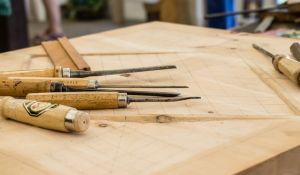
Expertise, aptitude, and appropriate equipment are necessary for woodworking. Having the appropriate tools is crucial for projects to be successful, regardless of experience level in woodworking. The trend of creating your own tools, or shop-built woodworking tools, is becoming more & more popular despite the abundance of store-bought options on the market.
Key Takeaways
- Shop-built woodworking tools can be a cost-effective and customizable solution for woodworkers.
- DIY solutions for woodworking tools offer advantages such as flexibility and creativity.
- Basic tools and materials required for building shop-built woodworking tools include saws, drills, clamps, and wood.
- Safety precautions for building shop-built woodworking tools include wearing protective gear and following instructions carefully.
- Tips for building quality shop-built woodworking tools include measuring accurately and using high-quality materials.
The benefits of do-it-yourself woodworking tool solutions, the fundamental tools and supplies needed to make them, safety considerations, building advice, basic tools for novices, advanced tools for seasoned woodworkers, shop-built tool maintenance and repair, shop-built tool cost-effectiveness, & the reasons they are an excellent investment for your craft will all be covered in this article. The cost-effectiveness of making your own woodworking tools is one of its main benefits. Tools from the store can get pricey, especially if you’re looking for high-quality items.
One can save a substantial amount of money by crafting their own tools. Customization is another benefit of creating your own tools. The tools are a perfect match for your woodworking tasks because you can customize them to your unique needs and projects. Often, store-bought tools cannot provide this degree of customization.
Finally, creating your own tools gives you a sense of fulfillment and success. Witnessing something you’ve created come to life with your own hands is a unique experience. A few basic tools are required in order to construct shop-built woodworking instruments.
| Tool | Description | Difficulty Level | Cost |
|---|---|---|---|
| Table Saw | A saw with a circular blade mounted on an arbor, used for cutting large pieces of wood. | Advanced | |
| Router Table | A stationary woodworking machine in which a vertically oriented spindle of a woodworking router protrudes from the machine table and can be spun at speeds typically between 3000 and 24,000 rpm. | Intermediate | |
| Drill Press | A drilling machine used to drill holes in wood or metal with a rotating bit. | Beginner | |
| Bandsaw | A power saw with a long, sharp blade consisting of a continuous band of toothed metal stretched between two or more wheels to cut material. | Intermediate | |
| Miter Saw | A saw used to make accurate crosscuts and miters in a workpiece by pulling a large backsaw or a mounted circular saw blade down onto a board in a quick motion. | Beginner |
A saw, a drill, a chisel, a mallet, a square, a tape measure, and clamps are a few of these tools. These tools are essential for precise & accurate construction & will be used throughout the building process. Materials like wood, screws, nails, glue, & sandpaper are also required in addition to the tools. Your decision about the kind of wood to use will be influenced by the purpose and type of tool you are making.
For your shop-built tools to last a long time, it’s critical to use high-quality materials. Whether using store-bought or shop-built tools, safety should always come first when handling potential hazards. There are certain safety measures you should follow when making your own woodworking tools. To protect yourself from potential injuries, wear the proper safety equipment, such as gloves and safety glasses, at all times.
You should also work in an area with adequate ventilation to prevent breathing in dangerous adhesive or finish fumes. Also, it’s critical to use tools correctly and adhere to manufacturer instructions. Finally, to avoid mishaps and injuries, maintain a tidy and orderly workspace. Care and precision are necessary when crafting high-quality shop-built woodworking tools.
Here are some pointers to guarantee that the tools you produce are of the highest caliber: 1. Precise measurements are essential in woodworking: “Measure twice, cut once.”. To avoid costly mistakes, take the time to measure your materials thoroughly before making any cuts. 2. Employ top-notch materials: The materials you use will determine how well your tools perform. To guarantee the longevity and performance of your shop-built tools, spend money on high-quality wood and hardware. 3.
Keep an eye out for joinery: Strong and stable tools depend on well-done joinery. Learn about various joinery techniques and select the one that best suits your project by taking the time to study them. 4. Sand and polish your tools: shiny surfaces are useful as well as visually beautiful. To get rid of any splinters or sharp edges, thoroughly sand your tools.
To improve the wood’s appearance and provide protection, apply a finish. A few basic tools are a good place to start if you’re new to woodworking and want to build your own tools. These multipurpose tools will provide a solid base for your woodworking endeavors.
A workbench, a miter saw, a router, a hand plane, a coping saw, and a set of chisels are the basic tools for novices. You can accomplish a variety of woodworking tasks with these tools, such as shaping and cutting wood, making joinery, and smoothing surfaces. More sophisticated shop-built tools are available for seasoned woodworkers who want to advance their trade. Although these tools demand more expertise and understanding, they can significantly improve your woodworking projects. A table saw, bandsaw, thickness planer, jointer, and lathe are a few examples of sophisticated shop-built instruments.
With the help of these tools, more intricate and precise tasks can be completed, like making complex joinery, sculpting curved surfaces, and turning wood into decorative objects. Similar to tools purchased from stores, shop-built woodworking tools also need to be maintained on a regular basis to guarantee their longevity and best performance. Cleaning, lubricating, and sharpening the instruments as necessary are all parts of proper maintenance. Examine your tools frequently for indications of wear or damage, and take immediate action to fix them.
Also, it’s critical to fix a tool as soon as it breaks or becomes damaged. This could entail putting the tool back together, changing a component, or making the required modifications. You can prolong the life of your shop-built tools and continue to reap their benefits for many years to come by taking proper care of them.
Cost-effectiveness is one of the key benefits of shop-built woodworking tools. When compared to buying tools from the store, building your own tools can save you a lot of money. Even though there might be a small upfront cost for supplies and equipment, there will be significant long-term savings. The ability to tailor shop-built tools to your unique requirements also removes the need to buy different tools for different tasks. You may assemble a useful and reasonably priced woodworking toolkit by building your own tools.
To sum up, woodworkers of all skill levels can benefit greatly from shop-built tools. These offer a feeling of fulfillment and achievement, are affordable, and can be customized. You can improve your woodworking projects, save money, and customize the tools to meet your unique requirements by making your own. Shop-built tools are an excellent investment for any level of woodworker, regardless of experience level. Start building your own woodworking tools and open up a world of possibilities for your woodworking projects, so why not give it a try?
If you’re interested in shop-built woodworking tools, you might also want to check out this article on “Top Woodworking Projects That Sell.” It provides a comprehensive list of popular woodworking projects that you can create and sell for profit. From small decorative items to larger furniture pieces, this article offers step-by-step instructions and valuable tips to help you turn your woodworking skills into a profitable venture. Read more
FAQs
What are shop-built woodworking tools?
Shop-built woodworking tools are tools that are made by woodworkers themselves, rather than being purchased from a store or manufacturer. These tools can be made from a variety of materials, including wood, metal, and plastic.
Why would someone want to build their own woodworking tools?
There are several reasons why someone might want to build their own woodworking tools. For one, it can be a cost-effective way to acquire tools that might be expensive to purchase. Additionally, building your own tools can be a fun and rewarding experience that allows you to customize your tools to your specific needs.
What are some examples of shop-built woodworking tools?
Examples of shop-built woodworking tools include hand planes, marking gauges, chisels, mallets, saws, and workbenches. These tools can be made using a variety of techniques, such as carving, turning, and welding.
What are the benefits of using shop-built woodworking tools?
One of the main benefits of using shop-built woodworking tools is that they can be customized to fit your specific needs. Additionally, because they are often made from high-quality materials, they can be more durable and longer-lasting than store-bought tools. Finally, using shop-built tools can be a source of pride and satisfaction for woodworkers who enjoy the process of creating their own tools.
Are there any downsides to using shop-built woodworking tools?
One potential downside of using shop-built woodworking tools is that they may not be as precise or accurate as store-bought tools. Additionally, if you are not experienced in woodworking, building your own tools can be challenging and time-consuming. Finally, if you do not have access to the right tools and materials, building your own tools may not be cost-effective.