
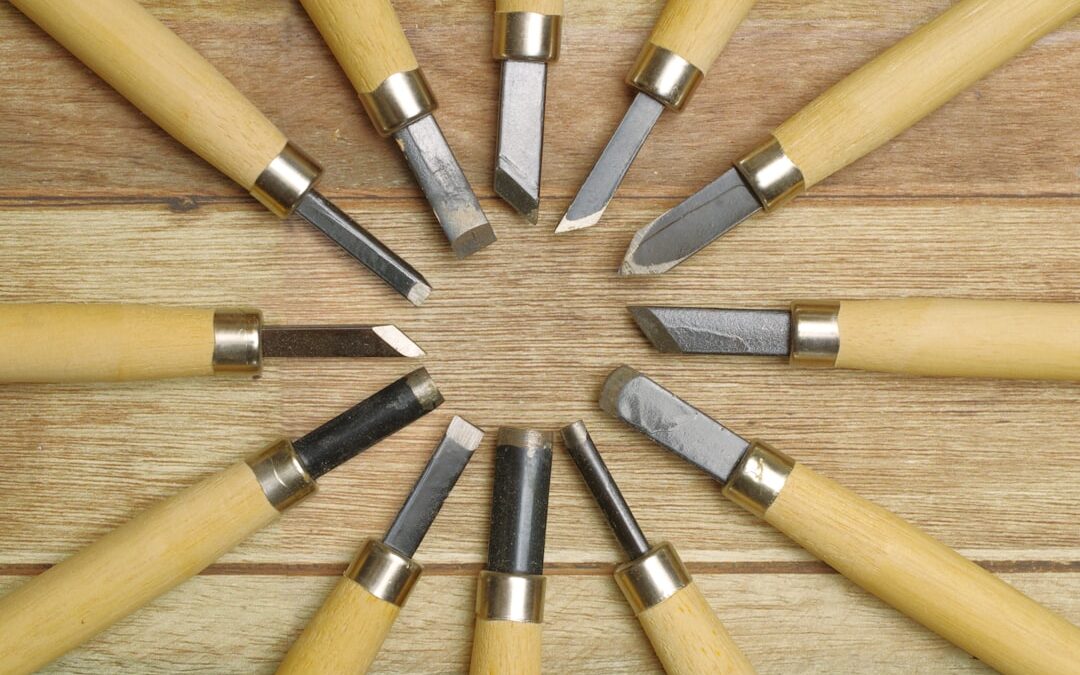
Long practiced for centuries, woodworking is an age-old craft. Wood has been utilized by humans to create both beautiful & useful objects from the earliest civilizations to the present. It is a gratifying & fulfilling endeavor that enables you to create something with your hands, whether woodworking is your hobby or your career. There are numerous advantages to woodworking. You can express your individual taste & style through this creative outlet.
Key Takeaways
- Fine woodworking requires patience, attention to detail, and a willingness to learn.
- Essential tools for fine woodworking include a saw, chisels, a plane, and measuring tools.
- Choosing the right wood for your project involves considering factors such as durability, grain pattern, and color.
- Joinery techniques such as mortise and tenon and dovetail joints create strong and beautiful connections between pieces of wood.
- Sanding and finishing are crucial steps in achieving a smooth and professional look for your project.
When the results of your laborious efforts are seen, it also gives you a sense of pride and accomplishment. Also, woodworking has the potential to be a therapeutic and stress-relieving hobby that helps you relax and concentrate. It’s vital to start with the fundamentals when learning fine woodworking. Establishing a robust knowledge & skill base will position you for success in increasingly complex projects.
You can hone your skills & boost your self-assurance by beginning with easy projects & working your way up to more difficult ones. A set of fundamental hand and power tools is required to begin fine woodworking. Hand tools are necessary for precise work because they give you control over how the wood is shaped and worked. A mallet, a coping saw, a hand plane, a set of carving tools, and a chisel set are a few basic hand tools.
However, when working with wood, power tools can save you time & effort. A table saw, miter saw, router, drill press, and random orbital sander are a few power tools that are necessary for fine woodworking. You can easily cut, shape, & smooth the wood with the help of these tools. Purchasing safety gear is crucial if you want to keep yourself safe when working with wood in addition to tools.
| Metrics | Values |
|---|---|
| Number of pages | 240 |
| Author | Richard Raffan |
| Publication date | October 1, 1997 |
| Publisher | Taunton Press |
| ISBN-10 | 1561581682 |
| ISBN-13 | 978-1561581682 |
| Language | English |
| Subjects | Fine woodworking, Woodwork, Woodworking |
To shield your eyes, ears, and lungs from dust and debris, you must wear safety goggles, ear protection, and a dust mask. It’s also critical to keep a first aid kit and a decent pair of work gloves on hand. Investing in high-quality brands and models is advised when selecting tools. Even though they could cost more up front, they will perform better & last longer.
Festool, Lie-Nielsen, and Veritas are a few trustworthy brands of woodworking tools. Seek out the best tools within your budget & needs by doing some research and reading reviews. For your project to be successful, selecting the appropriate wood is essential. Wood comes in a variety of varieties, each with unique color, grain pattern, & hardness. When choosing wood for your project, it is crucial to take these things into account. Hardwood & softwood are the two main types of wood.
Hardwood, which is renowned for its strength and durability, is derived from deciduous trees like walnut, oak, & maple. Coniferous trees, like pine and cedar, provide softwood, which is typically less expensive & simpler to work with. Taking your project’s particular requirements into account is crucial when selecting wood. It’s crucial to select a wood that is resistant to rot and decay, like teak or cedar, if you’re building furniture that will be exposed to moisture, like a dining table or outdoor bench.
Another crucial factor to think about is where you purchase wood. Specialty woodworking stores and local lumberyards are excellent places to start. Their assortment of premium wood is usually extensive, and they can offer professional guidance on selecting the ideal kind of wood for your undertaking. A large selection of wood options are also available from online retailers like Woodcraft and Rockler, who can have them delivered right to your door. The craft of joinery involves joining two pieces of wood to produce a sturdy & long-lasting joint.
There are numerous joinery methods, and each has advantages and disadvantages of its own. Trencher joints, finger joints, and mortise and tenon joints are a few popular joinery methods. Dovetail joints are renowned for their beauty and strength.
They are frequently employed in the construction of drawers and boxes. Mortise and tenon joints are adaptable & have multiple uses, including chair frames & table legs. Box joints, sometimes referred to as finger joints, are a robust and aesthetically pleasing joint that are frequently utilized in box construction. It’s crucial to adhere to a methodical process when creating a joint. Prior to anything else, mark the wood’s joint location.
Next, remove the material required to create the joint using the appropriate tools, such as a router or chisel. The two pieces of wood should then be fitted together and fastened together with screws or glue. A strong and attractive joint can only be created by achieving a perfect fit. In order to guarantee a snug fit, it’s critical to take your time & make exact cuts.
Accurate measurements and cuts can be achieved by using a marking gauge or marking knife. Also, honing your skills and avoiding costly errors can be achieved by practicing on scrap wood prior to beginning your actual project. The last stages in the woodworking process, sanding and finishing, are crucial to getting a polished, smooth finish. Sanding smooths out any rough edges or flaws in the wood, getting it ready for finishing. The natural beauty of the wood is enhanced and it is shielded from wear and moisture by finishing.
Employing the appropriate sandpaper type for the task is crucial when it comes to sanding. Sandpaper with a coarse grit, like 80 or 100 grit, is used to smooth out uneven areas and give the wood shape. To smooth the wood and erase any scratches from the coarse-grit sandpaper, use medium-grit sandpaper, like 120 or 150 grit. To get a polished and smooth finish, use fine-grit sandpaper, like 220 or 320 grit.
Apart from sandpaper, there exist alternative instruments and methods that can assist you in attaining a flawless surface. A power tool that can help you save time & effort when sanding large surfaces is the random orbital sander. To eliminate swirl marks and remove material uniformly, it moves in a circular motion.
For sanding small or difficult-to-reach areas, however, a sanding block is a portable instrument. There are numerous methods and supplies available for finishing. Staining, painting, and clear coat application are a few popular finishing methods. In addition to offering protection, stains can bring out the wood’s inherent color.
Paint gives the wood a long-lasting finish & can completely change its color. Clear coatings, like polyurethane or varnish, can preserve wood against moisture and deterioration while highlighting its inherent beauty. A beautiful piece of furniture requires excellent design. When designing your project, it’s critical to take both form and function into account.
Form is the piece’s overall shape and appearance, whereas function is its practicality and intended use. It is crucial to take the area in which your project will be installed into account when designing it. As you measure, take into account the piece’s proportions and size in relation to the space. You should also pick a design that blends in with the room’s style & aesthetic. While creating your project, there are a number of good design components that you should take into account.
When a design has balance, it means that the visual weight is distributed evenly. The elements can be arranged symmetrically or asymmetrically to achieve it. The relationship between the various components of a design is referred to as its proportion. Making sure the piece’s proportions are visually appealing is crucial. The general coherence & unity of a design is referred to as harmony.
It is crucial to select components that complement one another and produce a unified style. A plethora of tools and resources are at your disposal to assist with project design. One way to visualize your design and make changes before beginning construction is to sketch your ideas down on paper or with design software.
Aside from that, there are a ton of books and online guides that can offer ideas and direction for project design. You might be prepared to advance your abilities once you have mastered the fundamentals of fine woodworking. Numerous sophisticated methods exist that can encourage and test your creativity to the limit. Your projects can gain strength and complexity by utilizing advanced joinery techniques like the double mortise and tenon joint and the dovetail spline joint.
The decorative techniques of marquetry & inlay entail the cutting and fitting of metal, wood, or other materials into the surface of the wood. Using hand tools or a lathe, wood is shaped to create intricate & decorative details in the carving and turning processes. Finding resources and learning opportunities is essential for mastering advanced techniques. Experienced woodworkers can impart knowledge and provide practical skills through woodworking workshops and classes. In addition, a plethora of publications, including books, magazines, & online tutorials, can offer detailed directions and inspiration for more complex methods.
Errors occur frequently when working with wood, so it’s critical to understand how to correct them without having to start from scratch. Erroneous cutting, poorly fitting joints, & excessive or insufficient sanding are examples of common errors. You can use putty or wood filler to cover any holes or gaps left by erroneous cuts. To create a smooth and even surface, sand the filler down after it has dried. You can use a router or chisel to remove material and improve the fit if a joint isn’t fitting properly.
Using sandpaper with a finer or coarser grit can correct over- or under-sanding, depending on the desired outcome. The best course of action is usually to avoid mistakes in the first place. You can prevent expensive errors by using sharp tools, taking precise measurements, and honing your technique. You can also keep control and prevent errors by taking your time and working slowly and deliberately.
When it comes to woodworking, safety should always come first. When used improperly, power tools & sharp objects can be extremely dangerous. To protect your tools & yourself, it’s critical to take the appropriate safety measures.
To protect your eyes, ears, and lungs from dust and debris, you must wear safety goggles, ear protection, and a dust mask. Your hands can be shielded from cuts and splinters by wearing quality work gloves. Also, it’s critical to keep a first aid kit nearby in case of mishaps or injuries. Maintaining the safety of your tools and equipment is just as important as your own. You can increase their lifespan and reduce the chance of accidents by keeping them clean & well-maintained.
Damage can also be avoided by storing them correctly & by covering or using protective cases. There are a number of pointers and tactics that can assist you in marketing & selling your woodworking creations if you’ve honed your craft to the point where you’re interested in making it your career. It’s critical to highlight your abilities & craftsmanship when it comes to marketing your work. Capture excellent photos of your work, then turn them into a website or portfolio.
You should also think about taking part in art exhibits, craft fairs, and other events where you can sell your artwork in person. It can be difficult to set a fair price for your work, but you should take into account the time, resources, and expertise needed to produce each piece. You can find a reasonable and competitive price by investigating the market and evaluating the costs of comparable pieces. Also, allowing for customization or producing limited edition items can raise the worth and appeal of your creations.
Reaching a larger audience by selling your work online can be quite effective. You can interact with clients worldwide by opening an online store or selling on marketplaces like Etsy or Shopify. It’s critical to devote time and energy to producing superior product listings & first-rate customer support. In conclusion, fine woodworking demands patience, skill, & dedication but is also a rewarding and fulfilling hobby or career.
You may build long-lasting, exquisite, and useful furniture by starting with the fundamentals, selecting the appropriate wood & tools, & becoming an expert in certain critical techniques. Your woodworking abilities can be enhanced with practice & dedication, & you can even start a profitable business selling your creations. Just always put your safety first and have fun!
If you’re interested in mastering fine woodworking, you may also find this article on creating woodworking plans with free software to be incredibly helpful. This resource from Clever Wood Projects provides valuable insights and tips on how to utilize free software tools to design and plan your woodworking projects effectively. Whether you’re a beginner or an experienced woodworker, having access to these tools can greatly enhance your craftsmanship and bring your ideas to life. Check out the article here for more information.
FAQs
What is fine woodworking?
Fine woodworking is a type of woodworking that involves creating high-quality, intricate pieces of furniture or other wooden objects using traditional techniques and tools.
What are some common tools used in fine woodworking?
Some common tools used in fine woodworking include hand planes, chisels, saws, routers, and sanders.
What are some techniques used in fine woodworking?
Some techniques used in fine woodworking include joinery, carving, turning, and veneering.
What types of wood are commonly used in fine woodworking?
Common types of wood used in fine woodworking include cherry, maple, walnut, oak, and mahogany.
What are some benefits of mastering fine woodworking?
Mastering fine woodworking can lead to a sense of accomplishment and satisfaction, as well as the ability to create beautiful and functional pieces of furniture or other wooden objects. It can also be a lucrative career or hobby.
How can someone get started in fine woodworking?
Someone can get started in fine woodworking by taking classes, reading books or online resources, and practicing with basic tools and techniques. It is also helpful to seek out mentorship or apprenticeship opportunities.


