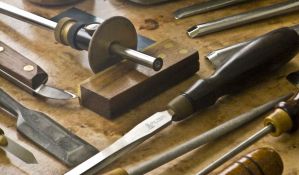
Hand tools are the backbone of any woodworking shop. They are essential for tasks that require precision and control. Some of the most important hand tools for woodworking include chisels, hand saws, planes, and carving tools.
Chisels are used for cutting and shaping wood, and they come in a variety of sizes and shapes to suit different tasks. A good set of chisels will have sharp, durable blades that can be easily sharpened when needed. Hand saws are used for cutting wood along the grain, and they come in different types such as crosscut saws, rip saws, and dovetail saws. A quality hand saw will have a sharp blade and a comfortable handle for easy use. Planes are used for smoothing and shaping wood, and they come in different types such as block planes, bench planes, and shoulder planes. A good plane will have a sharp blade and an adjustable throat for different tasks. Carving tools are used for intricate wood carving, and they come in different shapes and sizes to suit different carving techniques. A good set of carving tools will have sharp blades and comfortable handles for precise control.
In conclusion, hand tools are essential for woodworking because they allow for precision and control in shaping and cutting wood. Chisels, hand saws, planes, and carving tools are some of the most important hand tools for any woodworking shop, and having a good set of these tools will ensure that you can tackle a wide range of woodworking tasks with ease.
Key Takeaways
- Essential hand tools are crucial for woodworking, including items like chisels, hand saws, and planes.
- Power tools for precision, such as routers, jigsaws, and sanders, can help streamline woodworking projects.
- Measuring and marking tools like tape measures, squares, and marking gauges are essential for accurate woodworking.
- Joinery tools like dovetail saws, chisels, and tenon cutters are necessary for creating strong and precise joints in woodworking.
- Finishing tools like sandpaper, scrapers, and brushes are important for achieving a smooth and polished final product in woodworking.
- Safety equipment, including goggles, ear protection, and dust masks, is essential for protecting oneself while woodworking.
- Additional tools for efficiency, such as clamps, workbenches, and drill presses, can help make woodworking projects easier and more efficient.
Power Tools for Precision
Power tools are essential for woodworking because they allow for efficient and precise cutting, shaping, and joining of wood. Some of the most important power tools for woodworking include table saws, routers, power drills, and sanders.
Table saws are used for cutting large pieces of wood with precision, and they come in different types such as contractor saws, cabinet saws, and hybrid saws. A good table saw will have a powerful motor, a stable base, and a precise fence for accurate cuts. Routers are used for shaping wood and creating joinery, and they come in different types such as plunge routers, fixed-base routers, and trim routers. A good router will have a powerful motor, variable speed control, and adjustable depth settings for different tasks. Power drills are used for drilling holes and driving screws, and they come in different types such as corded drills, cordless drills, and impact drivers. A good power drill will have a powerful motor, variable speed control, and a comfortable grip for extended use. Sanders are used for smoothing wood surfaces, and they come in different types such as belt sanders, random orbit sanders, and palm sanders. A good sander will have a powerful motor, variable speed control, and a dust collection system for clean work.
In conclusion, power tools are essential for woodworking because they allow for efficient and precise cutting, shaping, and joining of wood. Table saws, routers, power drills, and sanders are some of the most important power tools for any woodworking shop, and having a good set of these tools will ensure that you can tackle a wide range of woodworking tasks with ease.
Measuring and Marking Tools
Measuring and marking tools are essential for woodworking because they allow for accurate layout and cutting of wood. Some of the most important measuring and marking tools for woodworking include tape measures, combination squares, marking knives, and marking gauges.
Tape measures are used for measuring the length and width of wood, and they come in different lengths such as 16 feet, 25 feet, and 30 feet. A good tape measure will have a durable blade with clear markings for easy reading. Combination squares are used for measuring and marking 90-degree angles, and they come with a ruler and a sliding head for precise measurements. A good combination square will have a solid construction with accurate markings for precise layout. Marking knives are used for scoring wood to create accurate cut lines, and they come with a sharp blade and a comfortable handle for easy use. A good marking knife will have a durable blade that can be easily sharpened when needed. Marking gauges are used for marking parallel lines along the grain of wood, and they come with an adjustable fence and a sharp cutting wheel for precise marking. A good marking gauge will have a solid construction with accurate adjustments for different tasks.
In conclusion, measuring and marking tools are essential for woodworking because they allow for accurate layout and cutting of wood. Tape measures, combination squares, marking knives, and marking gauges are some of the most important measuring and marking tools for any woodworking shop, and having a good set of these tools will ensure that you can tackle a wide range of woodworking tasks with ease.
Joinery Tools
Joinery tools are essential for woodworking because they allow for strong and precise connections between wood pieces. Some of the most important joinery tools for woodworking include dovetail jigs, biscuit joiners, pocket hole jigs, and mortise and tenon jigs.
Dovetail jigs are used for creating strong interlocking joints between wood pieces, and they come in different types such as hand-held jigs, router jigs, and bandsaw jigs. A good dovetail jig will have adjustable templates for different joint sizes and a sturdy construction for accurate cuts. Biscuit joiners are used for creating strong butt joints between wood pieces using small wooden biscuits, and they come with adjustable fences and depth settings for different tasks. A good biscuit joiner will have a powerful motor and accurate alignment for precise cuts. Pocket hole jigs are used for creating strong butt joints between wood pieces using pocket screws, and they come with adjustable guides and drill bits for different thicknesses of wood. A good pocket hole jig will have a sturdy construction with accurate alignment for precise drilling. Mortise and tenon jigs are used for creating strong mortise and tenon joints between wood pieces, and they come with adjustable templates and guides for different joint sizes. A good mortise and tenon jig will have a solid construction with accurate adjustments for precise cuts.
In conclusion, joinery tools are essential for woodworking because they allow for strong and precise connections between wood pieces. Dovetail jigs, biscuit joiners, pocket hole jigs, and mortise and tenon jigs are some of the most important joinery tools for any woodworking shop, and having a good set of these tools will ensure that you can tackle a wide range of woodworking tasks with ease.
Finishing Tools
Finishing tools are essential for woodworking because they allow for smooth surfaces and attractive finishes on wood projects. Some of the most important finishing tools for woodworking include hand planes, scrapers, sandpaper, and brushes.
Hand planes are used for smoothing wood surfaces and removing imperfections such as tear-out or tool marks, and they come in different types such as block planes, bench planes, and shoulder planes. A good hand plane will have a sharp blade and an adjustable throat for different tasks. Scrapers are used for smoothing wood surfaces by removing thin shavings of wood, and they come in different shapes such as card scrapers, cabinet scrapers, and curved scrapers. A good scraper will have a sharp edge that can be easily sharpened when needed. Sandpaper is used for smoothing wood surfaces by removing small amounts of material through abrasion, and it comes in different grits such as coarse grits (40-60), medium grits (80-120), fine grits (150-180), and extra fine grits (220-320). A good sandpaper will have durable backing with consistent abrasive material for smooth sanding. Brushes are used for applying finishes such as paint or varnish to wood surfaces, and they come in different types such as bristle brushes, foam brushes, and synthetic brushes. A good brush will have durable bristles or foam that can hold a large amount of finish for even application.
In conclusion, finishing tools are essential for woodworking because they allow for smooth surfaces and attractive finishes on wood projects. Hand planes, scrapers, sandpaper, and brushes are some of the most important finishing tools for any woodworking shop, and having a good set of these tools will ensure that you can tackle a wide range of woodworking tasks with ease.
Safety Equipment

Safety equipment is essential for woodworking because it protects the woodworker from potential hazards such as flying debris or harmful fumes. Some of the most important safety equipment for woodworking include safety glasses, ear protection, dust masks or respirators, and push sticks.
Safety glasses are essential for protecting the eyes from flying debris or dust particles during cutting or sanding operations. A good pair of safety glasses will have impact-resistant lenses with side shields for full protection. Ear protection is essential for protecting the ears from loud noise generated by power tools such as table saws or routers. A good pair of ear protection will have comfortable ear cups or plugs that can reduce noise levels to safe levels. Dust masks or respirators are essential for protecting the lungs from harmful dust particles or fumes generated during cutting or finishing operations. A good dust mask or respirator will have a comfortable fit with replaceable filters that can capture fine particles or harmful fumes. Push sticks are essential for safely guiding wood pieces through power tools such as table saws or jointers to prevent accidental contact with the cutting blades or bits. A good push stick will have a comfortable handle with a non-slip surface to provide secure control over the wood piece.
In conclusion, safety equipment is essential for woodworking because it protects the woodworker from potential hazards such as flying debris or harmful fumes. Safety glasses, ear protection, dust masks or respirators, and push sticks are some of the most important safety equipment for any woodworking shop, and having a good set of these tools will ensure that you can work safely without risking injury.
Additional Tools for Efficiency
In addition to the essential hand tools, power tools, measuring and marking tools, joinery tools, finishing tools, and safety equipment mentioned above, there are several additional tools that can improve efficiency in a woodworking shop.
Clamps are essential for holding wood pieces together during gluing or assembly operations to ensure strong connections without movement or slippage. They come in different types such as bar clamps, pipe clamps, spring clamps, or C-clamps to suit different tasks. A good set of clamps will have sturdy construction with adjustable jaws to accommodate various sizes of wood pieces.
Workbenches are essential for providing a stable surface to work on during cutting or assembly operations to ensure accurate results without movement or vibration. They come in different types such as traditional workbenches with vises or modern workbenches with clamping systems to suit different tasks. A good workbench will have sturdy construction with ample space to accommodate various sizes of wood pieces.
Storage solutions are essential for organizing hand tools or power tools to ensure easy access without clutter or disarray in the workshop. They come in different types such as tool chests, wall-mounted racks or rolling cabinets to suit different workshop layouts. A good storage solution will have ample space with adjustable compartments to accommodate various sizes of hand tools or power tools.
In conclusion, additional tools such as clamps, workbenches or storage solutions can improve efficiency in a woodworking shop by providing secure holding during gluing or assembly operations on stable surfaces without clutter or disarray in the workshop.
In conclusion,
Woodworking requires a variety of hand tools to shape the wood into desired forms including chisels which cut through the grain; hand saws which cut along the grain; planes which smooth out rough surfaces; carving tools which create intricate designs on the surface; power tools like table saws which make precise cuts; routers which shape the edges; power drills which create holes; sanders which smooth out surfaces; measuring tools like tape measures which provide accurate dimensions; combination squares which measure 90-degree angles; marking knives which score lines on the surface; marking gauges which mark parallel lines; joinery tools like dovetail jigs which create interlocking joints; biscuit joiners which create butt joints; pocket hole jigs which create pocket screws; mortise & tenon jigs which create mortise & tenon joints; finishing tools like hand planes which smooth out surfaces; scrapers which remove imperfections; sandpaper which smoothens surfaces; brushes which apply finishes; safety equipment like safety glasses which protect eyes from debris; ear protection which protects ears from loud noise; dust masks which protect lungs from harmful particles; push sticks which guide wood pieces safely through power tools; additional efficiency tools like clamps which hold wood pieces together; workbenches which provide stable surfaces; storage solutions which organize hand & power tools – all these play an important role in ensuring that the final product is well-crafted while also ensuring safety during the process.
Woodworking requires a variety of hand tools to shape the wood into desired forms including chisels which cut through the grain; hand saws which cut along the grain; planes which smooth out rough surfaces; carving tools which create intricate designs on the surface; power tools like table saws which make precise cuts; routers which shape the edges; power drills which create holes; sanders which smooth out surfaces; measuring tools like tape measures which provide accurate dimensions; combination squares which measure 90-degree angles; marking knives which score lines on the surface; marking gauges which mark parallel lines; joinery tools like dovetail jigs which create interlocking joints; biscuit joiners which create butt joints; pocket hole jigs which create pocket screws; mortise & tenon jigs which create mortise & tenon joints; finishing tools like hand planes which smooth out surfaces; scrapers which remove imperfections; sandpaper which smoothens surfaces; brushes which apply finishes; safety equipment like safety glasses which protect eyes from debris; ear protection which protects ears from loud noise; dust masks which protect lungs from harmful particles; push sticks which guide wood pieces safely through power tools; additional efficiency tools like clamps which hold wood pieces together; workbenches which provide stable surfaces; storage solutions which organize hand & power tools – all these play an important role in ensuring that the final product is well-crafted while also ensuring safety during the process.
Are you an aspiring furniture maker looking to build your woodworking skills? Check out this comprehensive list and explanation of must-have tools for any aspiring furniture maker. Whether you’re just starting out or looking to expand your workshop, having the right tools is essential for creating quality furniture pieces. And if you’re in need of some project inspiration, be sure to explore these easy woodworking projects for Christmas gifts, which offer a great way to practice your skills and create meaningful gifts for loved ones. Additionally, learn about what makes easy woodworking projects so accessible and how to get started with fine woodworking bench techniques. With the right tools and knowledge, you’ll be well on your way to mastering the art of furniture making. (source)
FAQs
What are the must-have tools for any aspiring furniture maker?
Some essential tools for furniture making include a table saw, a miter saw, a router, a power drill, a sander, clamps, chisels, and measuring tools such as a tape measure and a combination square.
Why is a table saw essential for furniture making?
A table saw is essential for making straight and accurate cuts on large pieces of wood, which is crucial for furniture making.
What is the purpose of a miter saw in furniture making?
A miter saw is used to make precise angled cuts, such as those needed for creating joints and frames in furniture making.
How is a router useful for furniture making?
A router is used to hollow out areas of wood, create decorative edges, and make precise cuts, making it an essential tool for adding detail and design to furniture pieces.
Why is a power drill important for furniture making?
A power drill is essential for drilling holes and driving screws, which are common tasks in furniture making.
What role does a sander play in furniture making?
A sander is used to smooth out rough surfaces and prepare wood for finishing, ensuring a professional and polished final product.
Why are clamps necessary for furniture making?
Clamps are essential for holding pieces of wood together while glue dries, as well as for securing pieces in place during assembly and construction.
How are chisels used in furniture making?
Chisels are used for carving and shaping wood, as well as for creating precise and intricate details in furniture pieces.
What measuring tools are essential for furniture making?
Measuring tools such as a tape measure and a combination square are crucial for ensuring accurate and precise measurements, which are essential for creating well-constructed furniture pieces.