CNC tools, or Computer Numerical Control tools, are machines that are controlled by computers to perform various manufacturing tasks with a high level of precision and accuracy. Precision manufacturing, on the other hand, refers to the process of creating products or components with extremely tight tolerances and exact specifications. This level of precision is crucial in industries such as aerospace, automotive, medical, and electronics, where even the smallest deviation can have significant consequences.
Precision manufacturing plays a vital role in various industries due to its ability to produce high-quality products consistently. In aerospace, for example, precision manufacturing ensures that aircraft components are made to exact specifications, reducing the risk of failure and improving safety. In the medical field, precision manufacturing is essential for producing medical devices and implants that need to fit perfectly and function flawlessly. The electronics industry relies on precision manufacturing to create circuit boards and microchips with intricate designs and precise dimensions.
Key Takeaways
- CNC tools are computer-controlled machines used in precision manufacturing.
- The evolution of CNC tools has led to increased efficiency and accuracy in manufacturing processes.
- Advantages of CNC tools include reduced labor costs, increased productivity, and improved quality control.
- Types of CNC tools include milling machines, lathes, and routers, with applications in industries such as aerospace and automotive.
- CNC tools improve efficiency by reducing setup time, minimizing errors, and allowing for complex designs to be produced quickly.
The Evolution of CNC Tools in Manufacturing
The history of CNC tools can be traced back to the 1940s when the first numerical control (NC) machines were developed. These early machines used punched cards or magnetic tapes to control their movements. However, it wasn’t until the 1970s that CNC technology became more widespread and accessible.
Technological advancements in CNC tools have been significant over the years. The introduction of computer-aided design (CAD) software allowed for more complex designs to be created and translated into machine instructions. This led to the development of multi-axis machines capable of performing intricate operations with high precision.
In recent years, advancements in sensor technology and machine learning have further improved CNC tools’ capabilities. Sensors can now provide real-time feedback on tool wear, temperature, and other variables, allowing for adjustments to be made automatically during the machining process. Machine learning algorithms can analyze vast amounts of data to optimize tool paths and improve efficiency.
Advantages of CNC Tools in Precision Manufacturing
One of the primary advantages of CNC tools in precision manufacturing is the increased accuracy and precision they offer. These machines can perform operations with tolerances as small as a few microns, ensuring that the final product meets the exact specifications required. This level of precision is difficult to achieve manually and can significantly improve product quality.
CNC tools also offer cost savings in terms of labor. Once a program is created and loaded into the machine, it can run continuously without the need for human intervention. This reduces the need for manual labor and allows operators to focus on other tasks, such as programming or quality control. Additionally, CNC machines can operate at higher speeds than manual machines, resulting in increased production output.
Another advantage of CNC tools is their ability to improve production speed. These machines can perform operations much faster than manual machines, reducing cycle times and increasing overall productivity. Additionally, CNC machines can run 24/7 without the need for breaks or rest, further improving efficiency.
Types of CNC Tools and Their Applications
| Type of CNC Tool | Application |
|---|---|
| End Mill | Cutting slots, keyways, and pockets in materials |
| Drill Bit | Creating holes in materials |
| Tap | Creating internal threads in materials |
| Boring Bar | Enlarging existing holes or creating internal features |
| Reamer | Creating precise holes with a smooth finish |
| Face Mill | Cutting flat surfaces on materials |
| Ball Nose End Mill | Creating curved surfaces or 3D shapes |
| Chamfer Mill | Creating angled edges on materials |
There are several types of CNC tools used in precision manufacturing, each with its own specific applications.
Milling machines are one of the most common types of CNC tools. They use rotary cutters to remove material from a workpiece, creating complex shapes and features. Milling machines are used in industries such as automotive, aerospace, and mold making.
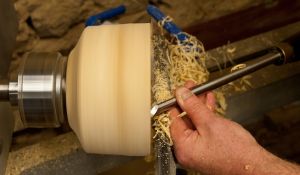
Lathes are another type of CNC tool that rotates a workpiece while a cutting tool moves along it to remove material. Lathes are commonly used in industries such as metalworking and woodworking to create cylindrical or conical shapes.
Grinders are CNC tools used for precision grinding operations. They can grind surfaces to extremely tight tolerances and create smooth finishes. Grinders are commonly used in industries such as automotive, aerospace, and tool manufacturing.
Routers are CNC tools used for cutting and shaping materials such as wood, plastic, and metal. They are commonly used in industries such as woodworking, signage, and cabinetry.
Laser cutters use a high-powered laser beam to cut through materials with precision. They are commonly used in industries such as automotive, aerospace, and electronics.
3D printers are a relatively new type of CNC tool that can create three-dimensional objects by adding layers of material. They are used in industries such as prototyping, manufacturing, and healthcare.
How CNC Tools Improve Efficiency in Manufacturing Processes
CNC tools improve efficiency in manufacturing processes in several ways.
Firstly, they automate repetitive tasks that would otherwise be time-consuming and labor-intensive. Once a program is created and loaded into the machine, it can repeat the same operation over and over again without the need for human intervention. This allows operators to focus on more complex tasks and increases overall productivity.
Secondly, CNC tools reduce the risk of human error. Manual machining processes are prone to mistakes due to factors such as fatigue or lack of concentration. CNC machines, on the other hand, follow pre-programmed instructions precisely, eliminating the possibility of human error. This results in higher accuracy and reduces the need for rework or scrap.
Lastly, CNC tools increase production output by operating at higher speeds than manual machines. They can perform operations much faster and more efficiently, reducing cycle times and increasing overall productivity. Additionally, CNC machines can run continuously without the need for breaks or rest, further improving efficiency.
The Role of CNC Tools in Quality Control and Assurance

CNC tools play a crucial role in quality control and assurance in precision manufacturing.
One of the key aspects of quality control is inspection and measurement. CNC machines are equipped with sensors and measurement devices that can provide real-time feedback on tool wear, temperature, and other variables. This allows operators to monitor the machining process closely and make adjustments if necessary. Additionally, CNC machines can perform in-process inspections to ensure that the final product meets the required specifications.
Consistency in production output is another important aspect of quality control. CNC machines can produce identical parts or components with high precision and accuracy. This ensures that each product meets the same quality standards and reduces the risk of variations or defects.
Traceability is also essential in quality control. CNC machines can record and store data about each machining operation, including tool paths, cutting parameters, and inspection results. This allows manufacturers to trace each product back to its production process and identify any issues or deviations that may have occurred.
Safety Considerations for CNC Tool Operations
Safety is a critical consideration when operating CNC tools.
Proper training and certification are essential for operators to understand how to operate CNC machines safely. They need to be trained on how to load and unload workpieces, set up tooling, and program the machine. Additionally, operators should be familiar with safety protocols and procedures, such as emergency stop buttons and machine lockout/tagout procedures.
Maintenance and inspection of equipment are also crucial for ensuring safety. CNC machines should be regularly inspected for any signs of wear or damage. Tools should be properly maintained and replaced when necessary to prevent accidents or injuries.
Implementation of safety protocols is essential in any manufacturing environment. This includes providing personal protective equipment (PPE) such as safety glasses, gloves, and ear protection. Additionally, safety barriers or guards should be installed around CNC machines to prevent operators from coming into contact with moving parts or cutting tools.
Future Trends and Innovations in CNC Tool Technology
The future of CNC tool technology holds several exciting trends and innovations.
One trend is the integration of artificial intelligence (AI) and machine learning into CNC machines. AI algorithms can analyze vast amounts of data collected during the machining process to optimize tool paths, improve efficiency, and reduce cycle times. Machine learning algorithms can also predict tool wear or failure, allowing for proactive maintenance and minimizing downtime.
Advancements in robotics and automation are also shaping the future of CNC tool technology. Collaborative robots, or cobots, are becoming more common in manufacturing environments. These robots can work alongside human operators, performing repetitive or dangerous tasks while ensuring safety. Additionally, advancements in robotics are enabling the development of fully automated manufacturing cells where CNC machines can communicate and coordinate with each other.
The development of new materials and processes is another area of innovation in CNC tool technology. As new materials are introduced, such as composites or advanced alloys, CNC machines need to adapt to handle these materials effectively. Additionally, new processes such as additive manufacturing or hybrid machining are being explored, which require advancements in CNC tool technology to be fully realized.
The Impact of CNC Tools on Manufacturing Industry and Economy
CNC tools have a significant impact on the manufacturing industry and the economy as a whole.
One of the key impacts is job creation and workforce development. As CNC technology continues to advance, there is a growing demand for skilled operators and programmers who can operate these machines effectively. This creates job opportunities and promotes workforce development in the manufacturing sector.
The increased use of CNC tools also improves the competitiveness of companies in global markets. Precision manufacturing allows companies to produce high-quality products consistently, giving them a competitive edge over competitors. This can lead to increased market share and growth opportunities.
Furthermore, the adoption of CNC tools promotes economic growth and innovation. By automating repetitive tasks and improving efficiency, manufacturers can increase their production output and reduce costs. This allows them to invest in research and development, develop new products, and explore new markets.
The Importance of CNC Tools in Precision Manufacturing
In conclusion, CNC tools play a crucial role in precision manufacturing across various industries. They offer several advantages such as increased accuracy and precision, reduced labor costs, and improved production speed. Different types of CNC tools are used for specific applications, ranging from milling machines and lathes to grinders and laser cutters.
CNC tools improve efficiency in manufacturing processes by automating repetitive tasks, reducing human error, and increasing production output. They also play a vital role in quality control and assurance by providing inspection and measurement capabilities, ensuring consistency in production output, and enabling traceability of production processes.
Safety considerations are essential when operating CNC tools, including proper training and certification, maintenance and inspection of equipment, and the implementation of safety protocols. The future of CNC tool technology holds exciting trends and innovations, such as the integration of AI and machine learning, advancements in robotics and automation, and the development of new materials and processes.
The impact of CNC tools on the manufacturing industry and the economy is significant, including job creation and workforce development, increased competitiveness in global markets, and economic growth and innovation. Continued investment in CNC tool technology is crucial to further advance precision manufacturing and drive future growth in the industry.
If you’re interested in CNC tools and woodworking projects, you might also enjoy reading about easy woodworking projects for Christmas gifts. This article provides a variety of creative ideas for handmade gifts that can be made using basic woodworking tools. From personalized cutting boards to custom wooden ornaments, these projects are perfect for adding a personal touch to your holiday gift-giving. Check out the article here to get inspired and start crafting!
FAQs
What are CNC tools?
CNC tools are computer-controlled cutting tools used in manufacturing processes to create precise and complex shapes and designs.
What types of CNC tools are available?
There are various types of CNC tools available, including milling machines, lathes, routers, plasma cutters, and laser cutters.
What materials can be used with CNC tools?
CNC tools can work with a wide range of materials, including metals, plastics, wood, foam, and composites.
What are the advantages of using CNC tools?
CNC tools offer several advantages, including increased precision, faster production times, and the ability to create complex shapes and designs.
What industries use CNC tools?
CNC tools are used in a variety of industries, including aerospace, automotive, medical, and electronics manufacturing.
What skills are required to operate CNC tools?
Operators of CNC tools require technical skills, including knowledge of computer programming, machine operation, and maintenance.
What is the cost of CNC tools?
The cost of CNC tools varies depending on the type of tool and its capabilities. Entry-level machines can cost a few thousand dollars, while high-end machines can cost hundreds of thousands of dollars.